Interview: Founder, Designer, Director and Curator Prem Krishnamurthy

Whenever you go to an art show, it is not only important to consider the art itself, but the space and context within which it is presented. These are all factors that exhibition designers, curators, and artists consider when working to bring an exhibition to life. At a recent, engaging panel at Americas Society, Prem Krishnamurthy and Shannon Harvey of Project Projects shared expert insight on many key elements of putting together an art show from start to finish. In this exclusive interview, Artifactoid sits down with Krishnamurthy, designer and founder of Project Projects, an award-winning graphic design studio, as well as the director and curator of P!, a critically-acclaimed exhibition space in New York’s Chinatown, to chat about curation and exhibition design, his eight-year dedicated study of East German graphic designer Klaus Wittkugel, a new experimental artist residency onboard commercial cargo ships, and more.

Artifactoid: What are some of the most important elements of curation and exhibition design to pay attention to when viewing an art show?

PK: I find that the most important thing to consider when viewing an exhibition is: what is the exhibition’s intention? What is it trying to persuade you of? How is it mobilizing the entire exhibition apparatus (or “exhibition prosthetics,” to use artist Joseph Grigely‘s term) starting from the press release (both text and design), checklist, display mechanisms, placement, lighting, contextual information, etc. in order to make a point or sell something? If you can understand the context and polemics of any given exhibition — especially in so-called “white cube” exhibitions, which make a claim to objectivity — then you have a better sense of where you, as the viewer, are being asked to stand.

Artifactoid: At a gallery show, museum exhibit, or art fair, what are the roles of the curator, the exhibition designer, and the artist? How do their roles differ, and on which aspects do they collaborate or exchange/interchange roles?

PK: Typically, these roles are intertwined — and thankfully so. Even though exhibition credits panels like to simplify and separate these roles, in the best exhibitions, there is a healthy overlap and intersect between content, mediation, and display. Not every exhibition has all three roles explicitly, but they are implicit in the work of making exhibitions.

Artifactoid: What were some of the biggest challenges you’ve faced as a curator, and how did you overcome them?

PK: I don’t come from a curatorial background; rather, I studied art, focusing on photography and graphic design, and was drawn to organizing exhibitions and programs early on. Although I’ve always had ideas for projects, as I began over the past 8 or so years to focus more rigorously on curating, I discovered I had a lot about the professional practice of the field to figure out. However, I’ve had the great advantage of having worked as a designer with many of the most talented and thoughtful curators and artists in the field, from whom I’ve learned a lot.

Artifactoid: Tell us a bit about some of the unique elements and processes that went into putting together the most recent show that is on display at P!, from a curation/design perspective.

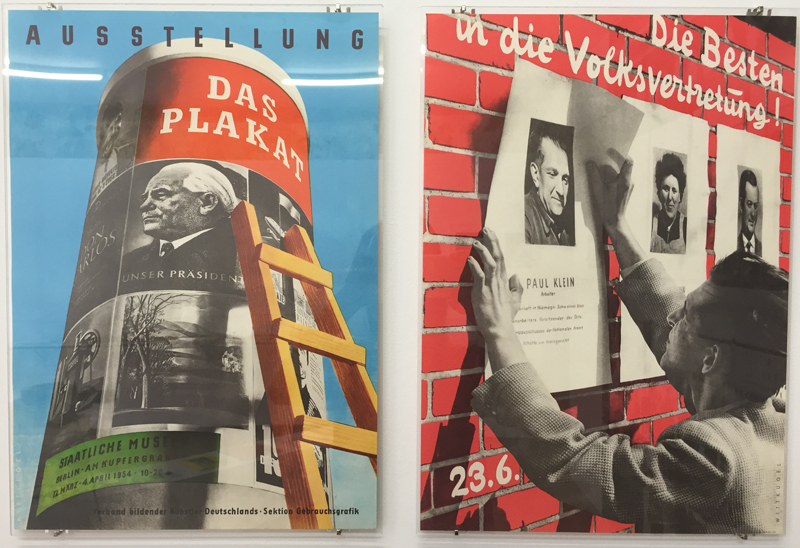
PK: The most recent show at P!, OST UND oder WEST: Klaus Wittkugel and Anton Stankowski was an unusual show for us on a number of levels: typically, we focus on mixing together different media, approaches, and historical periods, but this exhibition, in contrast, is truly about graphic design. This stems from the fact that I have been researching the subject of the exhibition, East German graphic designer Klaus Wittkugel (1910–1985) for over eight years. So in this case, it’s an exhibition that I have researched, organized, curated, and designed from start to finish. I’ve even acted as collector, since I’ve had to track down his work over the years! This wholesale collapse of roles almost makes it feel more like an artist project than a curatorial one. Yet in this case it’s also quite appropriate, since Wittkugel himself worked in this holistic manner, and sought, within the East German context, to broaden the role and reach of graphic design.

Ost

Artifactoid: Are there any exciting upcoming projects you’re looking forward to executing this year? 

PK: There are so many projects this year! It’s a really exciting time, actually, where it seems like I’ll be able to integrate the work I’m doing in design and curating to an even greater degree. A partial list of projects includes curating and designing an exhibition called Dis-Play/Re-Play at the Austrian Cultural Forum New York in collaboration with curator Walter Seidl; curating, organizing, and designing a new and experimental artist residency onboard commercial cargo ships called Container Artist Residency 01, with project founder and artist Maayan Strauss; a new website for Ballroom Marfa; curatorial consultation and permanent exhibition design for The Bass in Miami Beach; and identity, print, and web design for Zarigüeya, a new contemporary art project in Quito, Ecuador. Plus, I’ve got a whole slew of writing and publishing projects, in addition a full exhibition program at P! — so it should be a productive “Year of the Monkey”!

For more from P!, don’t miss the upcoming show, “Maryam Jafri: Economy Corner,” artist Maryam Jafri‘s first US solo exhibition, opening this Thusrday, February 25th with a reception from 6-8PM.

Jafri1

Meet the Artist Who is Setting Off Fireworks with Your Tweets at the MET Today for Chinese New Year

It may be Super Bowl weekend, but it’s also Chinese New Year, and contemporary artist ChiKa has something exciting in store for those visiting the MET this Saturday to celebrate the Year of the Monkey. Artifactoid sits down with the Japan-born New York-based talent to talk projection mapping, LED light installations, and the fireworks she is setting off at the MET today with your tweets.

Artifactoid: What inspired you to work with projection mapping and LED light as mediums? How did you get your start with them and what drew you in?

ChiKa: For projection mapping, it was a natural progression of interest from working with live visuals and VJing; I was working with experimental composers, festivals and clubs. The organic next step for me was projection mapping. I wanted to explore. I got out of doing ordinary projection surfaces in dark spaces (2D screens) and moved toward doing projection mapping onto 3D surfaces and objects. As for how I got my start, I was working as a graphic designer at a big corporation and wanted to do something artsy. So, I started going out to anywhere that would let me perform live visuals and VJ every weekend.

Then, my interest in LED light installation stemmed from the projection mapping. When the software I used for projection mapping, “MadMapper,” released its new feature, MadLight, that allowed me to control LED lights from video content, I decided that I wanted to shift from projection to an LED light installation.The stage set made during Mapping Festival in Geneva also inspired me to get into LED light installations. To get started, a good friend of mine (who is one of the founders of MadMapper) gave me a jump-start technical session. I love to make the geometric structures with led lights!

Artifactoid: What are some of the most memorable projects you’ve worked on with each medium?

ChiKa: For projection mapping, it was projection mapping in Mexico during MOD Festival, and for LED light installations, it was my first large public installation, SEI02 at the Dumbo Arts Festival 2014.

Artifactoid: What was your most challenging art installation to pull off and how did you do it?

ChiKa: Every installation is a challenge. I think it is a nature of the technology. No matter how much I prepare before the installation, you never know what will happen. Be patient, organized and just clear problems one by one. Always works in the end anyway.

Artifactoid: Who are some other talented artists working  in the spaces of LED and projection mapping who inspire you?

ChiKa: AntiVJ, 1024 Architecture, Nonotak, and James Turrell.

Artifactoid: What is the best piece of advice you’ve received in your career as an artist?

ChiKa: Follow your dream.

Artifactoid: How does teaching projection mapping and theater affect the way you approach your own art?

ChiKa: I can alway learn from my students. I need to be very flexible in order to be able to teach. I also teach differently every time I teach. There is no one way to teach. Art is the same; there is no one way.

Artifactoid: What are your additional artistic influences?

ChiKa: My background: being Japanese. Also, my ethicality. That always shows in my artwork. A third influence of mine is good music.

Artifactoid: Tell me a bit about your exciting project at the MET for Chinese New Year.

ChiKa: For this project, I am working with my partner in crime, Calli Higgins, who I have been working with since graduate school at NYU ITP. We are creating digital fireworks triggered by the Twitter hashtag “#metfest” during the Chinese New Year event at the Metropolitan Museum of Art. You can check it out today, here!

Artifactoid: Anything else you’d like to add?

ChiKa: I’m also installing a new artwork at Ramapo College in NJ right now. The opening is this coming Wednesday, February 10th and the installation will be on view for one month.

Culture Fix: Lower East Side Galleries

In need of your NYC culture fix this week? Check out this cluster of great galleries located on Broome Street between Chrystie and Bowery. Here’s a preview of three shows to see now:

1._P!: OST UND oder WEST: Klaus Wittkugel and Anton Stankowski 

Catch the current show at P! curated by Prem Krishnamurthy and Cay Sophie Rabinowitz, on view through February 21st, 2016. This show explores the forms and ideologies of Modernist graphic design as it presents the work of Klaus Wittkugel (East Germany) and Anton Stankowski (West Germany), contrasting the production of image and meaning within competing social and economic systems.

CultureFix1

2.   CANADA: Katherine Bradford: Fear of Waves

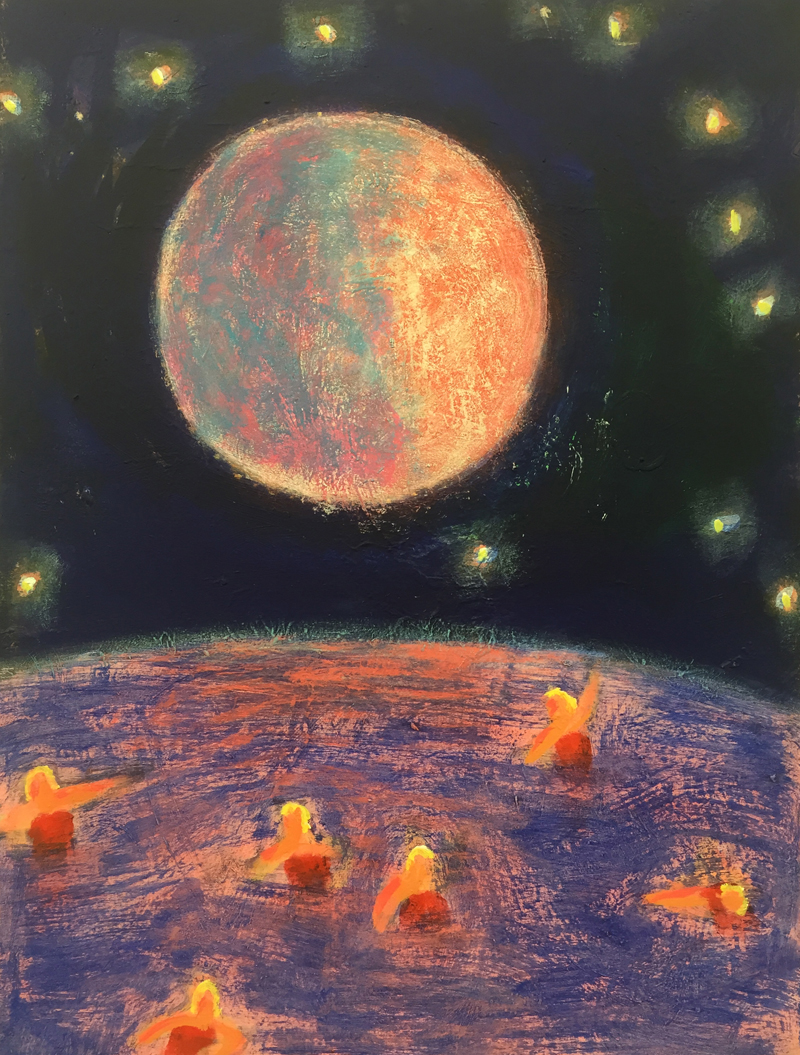
Don’t miss this magical series of acrylic paintings by Katherine Bradford at the acclaimed CANADA gallery. Fear of Waves features dreamlike imagery of water and swimmers, created with painting techniques whose results take the artist months and sometimes years to achieve. Bradford’s work has been featured at P.S.1 and The Brooklyn Museum among other institutions and in 2011 she was awarded a Guggenheim Fellowship. Her work is in the collections of the MET, The Brooklyn Museum and the Portland Museum of Art. See this show through February 14th, 2016.

CultureFix2

3.   Nicelle Beauchene Gallery: Jonathan Baldock: The Skin I Live In

The Skin I Live In is London-based artist Jonathan Baldock’s first New York solo show. For this series of unique sculptures and wall pieces, Baldock employs an unusual mix of media to explore and engage with the physical and conceptual conditions of the human body. The work is on view until February 7th, 2016.

CultureFix3


Alone for the Holidays? Conceptual Photographer Suzanne Heintz has a Remedy for That

Sometimes when you walk into an art gallery opening, there’s a lot of craziness. The space can be packed shoulder-to-shoulder with people sipping booze and chatting loudly, and it can be difficult to actually get a good idea of the art you’re looking at through the sea of bright red lips and thick-rimmed glasses. While these aren’t ideal conditions for someone aiming to write an article about the art (like myself), having a glowing room of excited and supportive patrons is both a great sign for the artist showing her work, and fun!

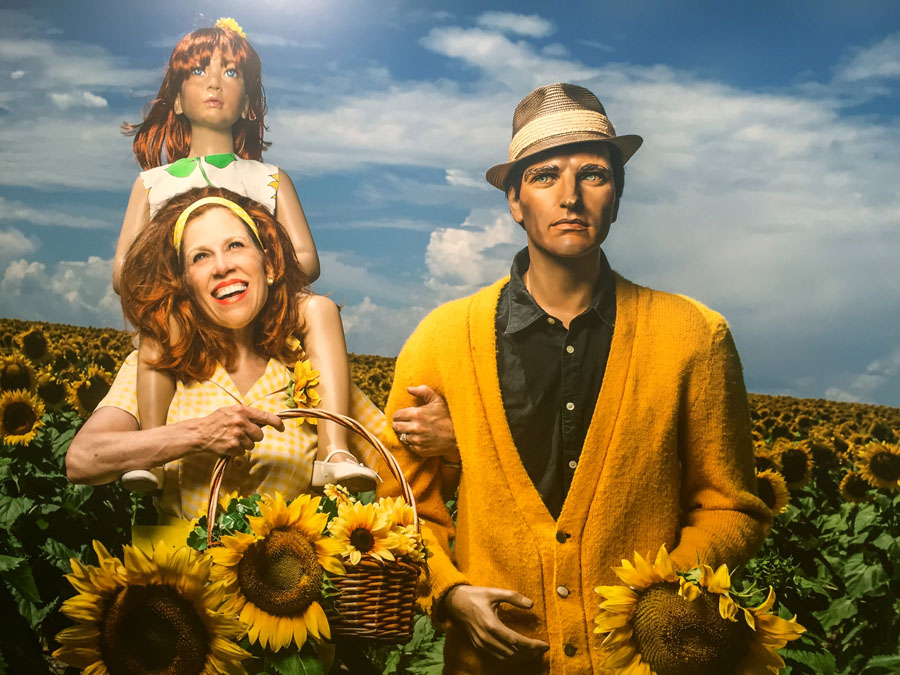
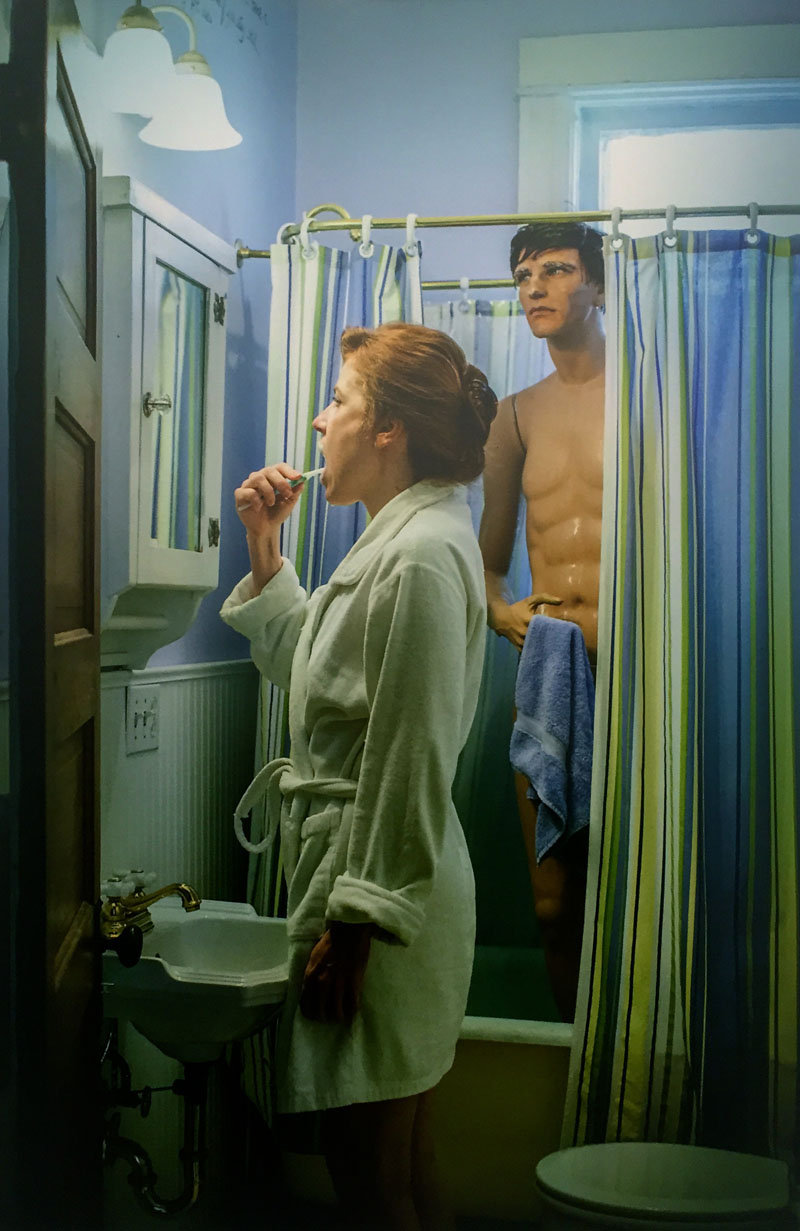
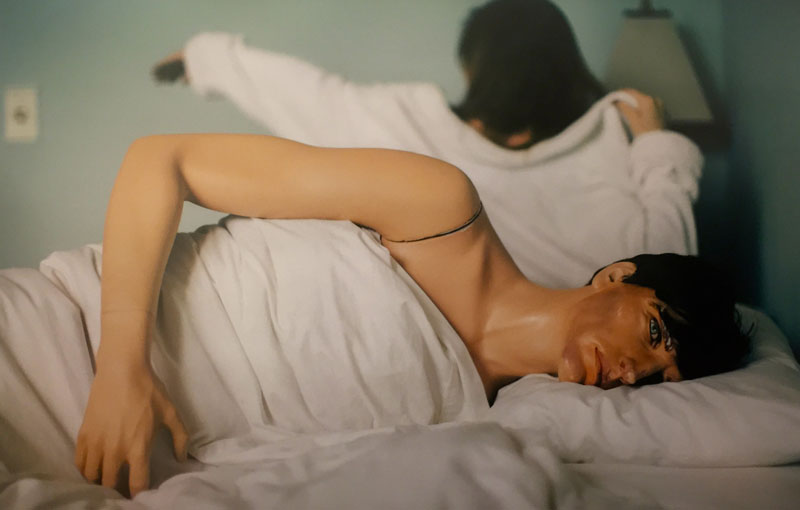
The aforementioned describes the scene where I met Conceptual Artist Suzanne Heintz: the bustling opening night of her show “Playing House” in Chelsea at the JoAnne Artman Gallery. While I couldn’t get a thorough grasp of the story behind her work at the opening, the striking, absurd, brightly colored photographs depicting Heintz with her husband and daughter in Paris, among other settings, stuck with me. This is because I learned that unlike my family and most likely yours, Heintz’s husband and daughter are actually life-sized fiberglass mannequins, or as she lovingly dubs them, “familyquins.”

Heintz1

With this in mind I decided to dive further into researching Heintz and her work, and what I found was, unexpectedly, a perfect story for the holidays — a time when for some singles, it can feel like there is added pressure from either society, family or self to be in a relationship.

Heintz2

Heintz, a conceptual artist, 20-year veteran art director at Starz, and self-proclaimed spinster among other things, recalls sitting around with her mom one day having a conversation that, per Heintz’s entry in the Huffington Post Blog, went along the lines of: “Suzy, there’s nobody perfect out there. You just need to PICK somebody, if you’re going to settle down.” [Heintz] snapped back, “Mom! It’s not like I can go out and BUY a family! I can’t just MAKE it happen!”

Heintz3

Then, one day shortly following this conversation, Heintz was walking around and passed by a shop that happened to have a “family” of mannequins for sale in the window. She had an “aha!” moment, and decided to literally “buy” herself a family: a husband, who she calls Chauncey, and an “eight year old” daughter, who she named Mary Margaret. Starting at that moment, Heintz set out on a fourteen year journey carrying Chauncey and Mary Margaret around to various locations, filled with countless family photo and video ops including holidays, European vacations and even a wedding.

Heintz4

Heintz does an incredible job of adding a dose of smart humor (plus what is now likely upwards of a decade and a half of mind blowing dedication) to her critical examination of an important topic. On one hand, with this project Heintz comments on normative role expectations for women, encouraging them to embrace their lives regardless of whether or not they have an “Mrs., PhD, or Esq. attached to their name.” On another, according to the JoAnne Artman Gallery, Heintz also comments on “The American Dream and the pressure to conform.” To note, I found the tie to The American Dream interesting because in 2015, that phrase, in its original sense, can seem antiquated. Stemming off of that, I think it could be an interesting follow-up study to examine Heintz’s work in the context of other artists who work with the idea of The American Dream, both currently and throughout art history.

Finally, Heintz’s work is really interesting to look at within the context of today’s era of social media (especially since Heintz began her “family life” with Chauncey and Mary Margaret before social networks really took off in a mainstream way). Specifically, people frequently post photos across various social channels that seem to demonstrate that they are fulfilling ideals of happiness, but for all anyone really knows, they may as well be posing with mannequins. Per the JoAnne Artman Gallery, Heintz’s use of “radioactive color and expressionless characters hint at the darker side of conformity, namely what is lost when the image, or illusion, of happiness is confused with happiness itself.”

Heintz5

Suzanne Heintz’s “Playing House” is showing at the JoAnne Artman Gallery through December 31st, 2015. Check it out in person if you’re in Chelsea this holiday season, and feel free to bring along your significant other. All shapes, sizes and materials are welocme.

Interview with Theresa Byrnes, Painter and Performance Artist

Australian-born and New York-based Painter and Performance Artist Theresa Byrnes talks with Artifactoid about inspiration, a return to her roots as a painter, and her most recent performance, “Mudbird,” created in collaboration with her 20-month-old son. 

Artifactoid: How did you get started as an artist?

TB: At age 16 in 1985, my studio was the family lounge and dining area. I would start to paint every night after dinner while everyone watched TV.  By the time everyone went off to bed one by one, I would get more and more on a roll. I would paint through the night. Soon I outgrew the family room, no longer able to pack all my canvases neatly every night without disrupting my process or running the risk of wet work being trodden on when the the family awoke. I scoured the classifieds to find a studio. I found part of a warehouse to rent cheaply, so I did. 29 years ago, at age 17 in 1986, I began to paint full-time in my very own studio!

I had already been included in minor group shows from 14 years of age and on. While in high school I did life drawing classes at night, and some of my drawings were selected for a group show. I went out on a limb and contacted a curator who included my work in a rotating VIP lounge, and my work began to sell. My first solo exhibition was at 17, but I consider being an artist about making art more than about exhibiting or selling it.

Paints

Mistakes in painting are like an angel pushed your hand, changing your direction to somewhere you never would have gone

Artifactoid: Who are your biggest influences in performance art and why? Who inspires you?

TB: I did my first performance when I was 19 in 1989 in Sydney Australia’s Chinatown. The piece, titled “China Crisis,” was my response to the Tiananmen Square Massacre. My entrance into doing performance art was not inspired by an artist, but by heroic dissent. The cry out for freedom and justice inspires me. In “China Crisis,” I laid in front of a large red painting. For me, performance is a natural spill-over from painting: paint is my language, I just commit my body to performance. “TRACE” (2007) was inspired by a dying bird in an oil spill. In “DUST TO DUST” (2011), dirt was my inspiration – the transformative power of mulch.

TRACE-2

In 2002, I met Carolee Schneemann; we read each other’s books (mine The Divine Mistake, her’s More Than Meat Joy). I learned a lot about her work, and felt connected to her even more once I learned that she is also a painter whose performance flows from that.

DusttoDust-2

Artifactoid: What are some of your biggest day-to-day influences as an artist?

TB: Stains on the sidewalks, streaks with random marks on windows – I made a short  film about sidewalk markings titled, CARELESS in 2000. Tunde Adebimpe (TV on the Radio) helped me shoot and edit it (he is now my son’s godfather). It was screened at MONA (Detroit) in 2001.

Old, decaying wood also inspires me, I have done several painting series on aged wood 2001 and 2010. When I paint on aging wood, I feel like I am collaborating with nature, not trying to capture it.

IHateRosesandtheSeaAteMe copy

Artifactoid: How has your perspective as an artist changed over time?

TB: That nothing is permanent. Earlier in my career, well, pre-September 11th, I cared greatly about paintings lasting forever. Now I feel “archival” materials are pitched to artists who believe this civilization will survive another 500-1000 years. I am into showing who we are now, because now is real: all we have, vulnerable, avoided, denied, unnoticed. Art materials are everywhere; they’re not limited to an art store. I love to work with mud and hair and other ingredients as well as ink and oil paint.

Artifactoid: What are some of the most important lessons you’ve learned through your art?

TB: That nothing is a mistake. Mistakes in painting are like an angel pushed your hand, changing your direction to somewhere you never would have gone. In my entire 30-year career, painting still genuinely astounds me – the unguessable moment it resolves.

Artifactoid: What is the best advice you’ve ever received in your career?

TB: Be humble.

Artifactoid: In what direction would you like to take your art moving forward?

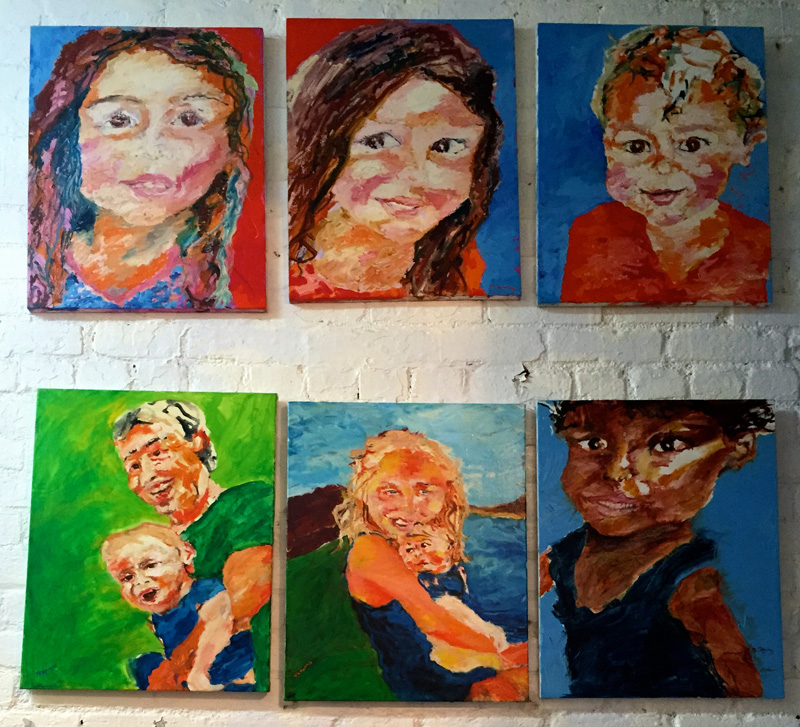
TB: I am at a turning point. I am returning to my roots as a painter, where I first discovered my talent and lost my identity/sense of separation from art in the process: painting portraits. For the next two years, I will only paint portraits. Abstraction and performance art lent to my feeling immortal, but now, I am a mother and I feel human, more grounded and more vulnerable than ever. I am pulled to dive in in this direction.

Portraits

Artifactoid: What advice would you give to other artists?

TB: Know when to stop. As long as you are making art, “you’ve made it.”

Artifactoid: Please describe your inspiration behind “Mudbird,” and some of the most important things about the piece (to you).

TB: “Mudbird” is the second performance I have done with my son, Sparrow, (now 20 months old). In “Mudbird” I play with my baby in the mud thinking of the cycle of all beings – to live and die. We come from the earth and end up in it. Mud; earth, is a uniting and dividing force between mother and child. I gave my life for his to begin. Okay, I am not dead yet, but a part of me has died – my life as a single artist.

MudbirdRainerHosch copy

At the time of performance, I felt a sense of my immanent death. I have Friedrich’s Ataxia (FA). It is a chronic and fatal genetic disorder of the nervous system. I have been wheelchair-mobile for 20 years. My voice slurring, mundane things slowly getting harder, and recently I tore my right rotator cuff. I have never felt disabled, as I have always fulfilled my aims and called the shots, but post-birth and with injury, I felt unusualły hopeless. Sure I cannot walk, but now I can’t fly; wings clipped. Much of the “Mudbird” series is about my burial and Sparrow’s flight. It has been a burial of several parts of myself. And now I again recreate myself, or return to who I am.

TheresaMeStudio

Theresa Byrnes has had over 25 solo shows at spaces including Saatchi & Saatchi in New York and Sydney, and the Australian Embassy in Washington D.C. In 1996, she was awarded Young Australian of the Year. To keep up with Theresa and her latest works, visit her website and follow her on Instagram, Twitter and FacebookStop by her gallery space, TBG (616 East 9th street between Avenues B&C), for her next opening on December 9th, 2015 . 

Santiago Villanueva, Y Gallery

I first met Artist Santiago Villanueva in 2010 in Buenos Aires. We were inside of the University of Buenos Aires social sciences campus, called “Marcelo T. de Alvear,” spending the day hijacking social and political student protest posters that would later be utilized in another artist’s exhibition in Scotland. That university campus is known as the most activist campus in the city.

SantiagoVillanueva7

At that time I was very wide-eyed and excited, witnessing first-hand this incredibly palpable activist energy in Buenos Aires. I was noticing the strong sociopolitical commentary both in the city’s daily life, as well as in art and expression in Argentina in general. It was coming from students and citizens of all walks of life, as well as from the top contemporary artists in the country.

YGalleryVillanueva2 copy

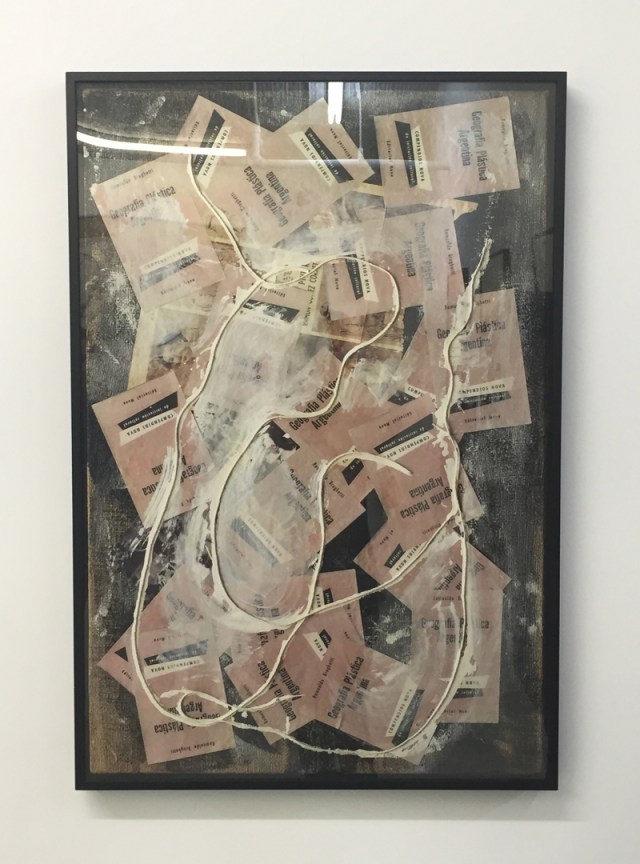
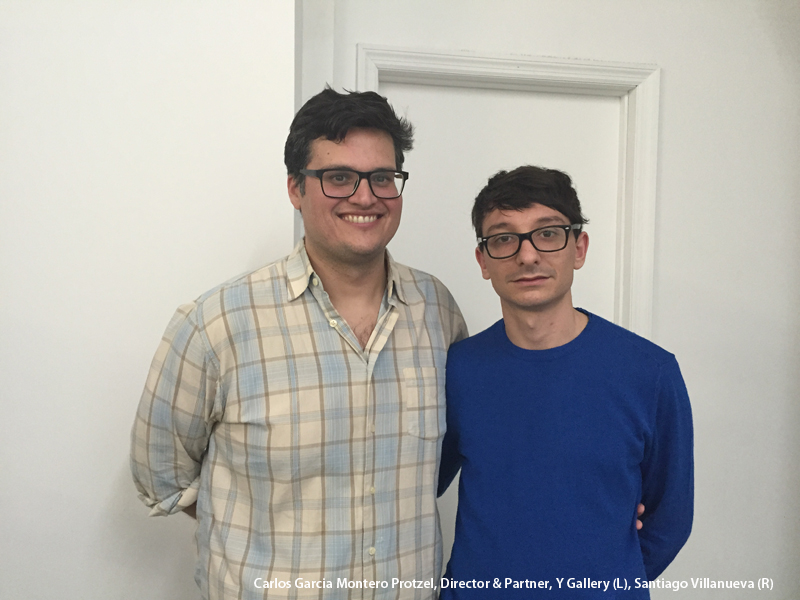
I’m thrilled to share that Villanueva, one of the influential contemporary artists I had the privilege of spending time with there, is currently exhibiting at NYC’s Y Gallery on the lower east side with a show titled “First Impressions.” The exhibition comprises a series of recent works that reflect his continuing revision of Argentinian history and art history.

YGalleryVillanueva4

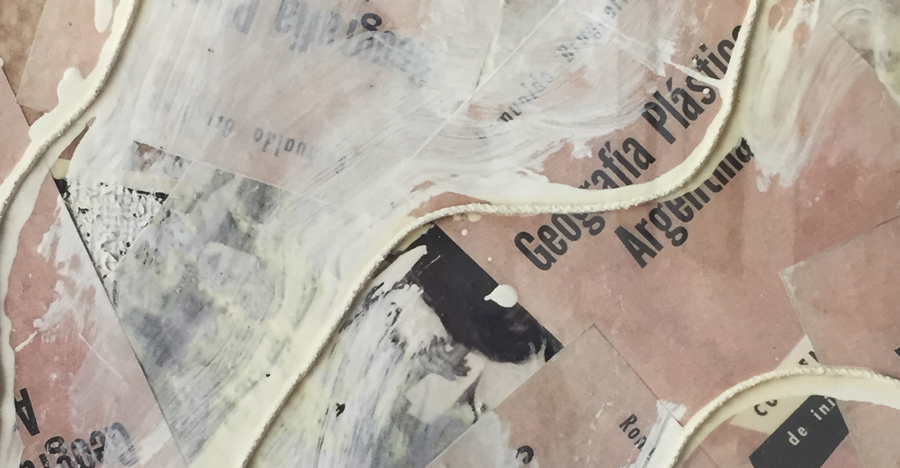
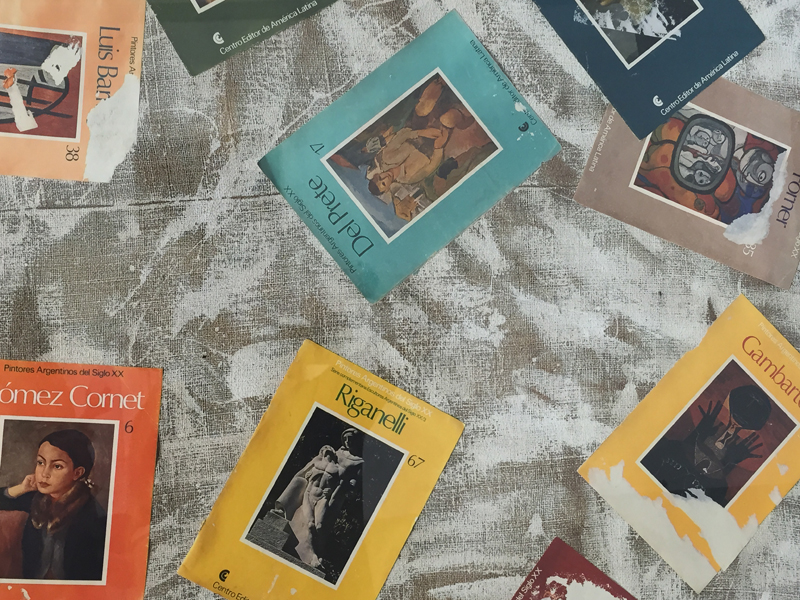
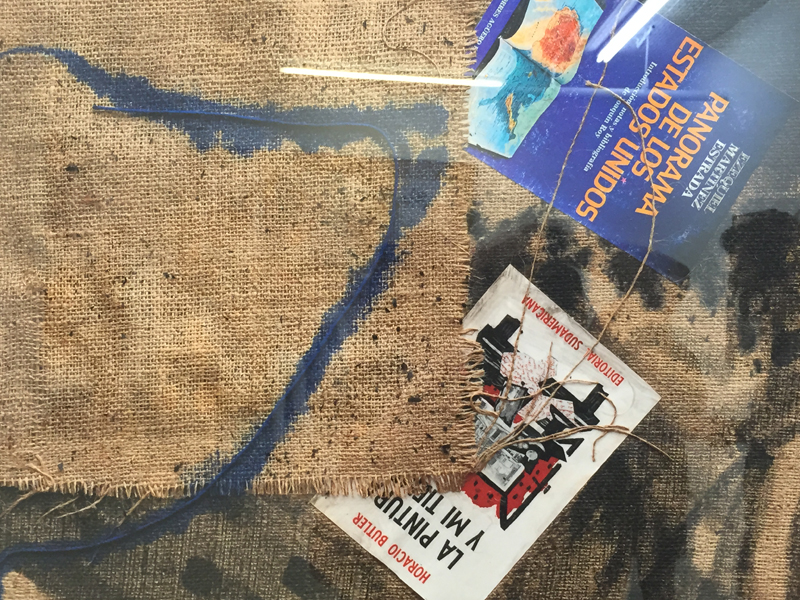
“First Impressions” combines a mid-19th century Argentinian visual tradition called the “disorderly table,” or, “mesa revuelta” (imagine it as a messy still life), with the results of Villanueva’s past two years of research about Argentinian art history. For the project, Villanueva worked with a variety of media including papers, threads, letters, documents and images selected from both the mass media and the works of specific artists. The result is a personal map or atlas of Argentinian art history that both changes the usual visual expectations of a still life, and provides a unique, non-linear methodology for the understanding of art history that breaks from traditional pedagogic approaches.

Villanueva8 Villanueva6

This exhibition marks another success in Villanueva’s exciting career. In recent years he has received a consistent stream of honors from prestigious organizations, including scholarships at the Center for Artistic Research (Centro de Investigaciones Artísticas – CIA) and the Cisneros Fontanals Art Foundation (Fundación Cisneros Fontanals – CIFO), as well as appearances in museums and institutions including the General Argentine Consulate in New York, the Museum of Modern Art of Buenos Aires (MAMBA), and the Museum of Latin American Contemporary Art (MACLA).

Villanueva9

Stop by Y Gallery (319 Grand St.) to see “First Impressions,” open through November 15th, 2015.


Interview with Marina Reiter, Director, Studio 26 Gallery

Artifactoid sits down with Marina Reiter, Artist and Director of Studio 26 Gallery located in the heart of NYC’s East Village. Stop by her East 3rd Street space to hear live music, sit in on a poetry reading, or view visual art that ranges from sculpture, to painting, to performance and more. Also, don’t miss Studio 26 at Art Basel Miami week’s Aqua art fair this year.

Artifactoid: I saw on your website that you opened Studio 26 in 2012, and recently celebrated a one-year anniversary in the East Village space. Congrats! Where did you start out, and how did you decide upon NYC’s East Village? How does the gallery’s location affect the experience of it?

MR: The gallery was originally founded in Bushwick in 2012. The only problem with Bushwick was that there weren’t that many storefront spaces per-se, and renting a gallery space requires a storefront because it’s important to engage the public on a daily basis. We finally saw this space in the East Village, on East 3rd Street in the “mosaic” building, and I really liked the artistic quality of the building itself. The owners said that in fact, they’d had a lot of offers on the space, but they really wanted a gallery to be in there. So, there was a match made in heaven!

Artifactoid: What were you doing prior to opening the studio? What led you to open it, and how did it come together?

MR: I used to run a lot of galleries. I was in Washington, DC and when I lived there, I was gallery director for Studio Gallery, one of the oldest galleries in DC (founded in 1964). It was a collective gallery and at that time we had probably 34 artists that we worked with on a daily basis. We had three floors, and each floor was a different exhibition, so it was just exciting to be totally immersed in that creative energy.

Then, I decided to move to New York in 2009, right after the economic crash. The crash made me rethink certain things in my life — including where I wanted to be — and I decided that I had to be in New York. And, in 2010, I became co-partner in a gallery in Vienna, Austria, called “Gallery M.” We did a lot of international exchange shows between US artists, German artists, and Austrian artists and a lot of art fairs: Art Beijing, art fairs in Strasbourg, Luxembourg. I met a lot of interesting European artists like sculptor Gianfranco Meggiato who recently finished a big commission for the Prince of Monaco.

I was torn between Vienna and New York. I was on the plane every other week. I knew that I needed to do something here in New York City, in my own backyard, so that’s how Studio 26 came about.

Artifactoid: Tell me about some of the noteworthy artists you represent. Which have made the biggest impact on Studio 26 since its opening?

MR: I work with a lot of international artists, and it’s just an amazing experience because international artists really bring their own, unique perspectives. We have artists from France, Norway, Brazil, Turkey — amazing artists, working using all different techniques…and for me, just to be looking at all the art and talking to them completely opens up my mind.

One of the artists that I’ve worked with in the past, from Washington, DC, is John Bodkin. He used to live in the East Village back in the ‘70s. He’s an amazing person, a great artist, and has a very interesting history. Back in the ‘70s when he was a young man, trying to navigate this crazy art world in New York City, he ended up in the East Village and became friends with Robert Rauschenberg, Frank Stella…they would visit Louise Nevelson’s studio…these are these amazing artists who nowadays are almost god-like creatures, but back in the day, John was hanging out with them, learning from them, talking to them…and ended up carrying on that tradition from the ‘70s. You can definitely see that in his paintings; there’s a lot of Rauschenberg and Stella influence. It’s just amazing to be working with people like that who are part of living history, so to speak. That’s one of the moments that makes daily “gallery life” so exciting: just working with people like that, who are part of history.

Artifactoid: Tell me a bit about your own art, the history of you as an artist.

MR: I describe my art as “biomorphic, organic, abstract art.” My family has a lot of artists. Both of my uncles are famous Russian artists. My great uncle, Nikolai Solomin, actually studied with the founders of classical Russian realism. His son, also Nikolai Solomin, is now probably one of the most recognized Russian painters. They work in either realism or impressionism, and I would say some military realism. I always admired that, but I never felt that realism or landscape were things that I had a tremendous passion for.

When I first came to the US from Russia, I was seven years old. My family and I went to the MET, and that was when I saw abstract art for the first time. I felt like it was something I could absolutely relate to. Then, as a young adult, I decided that I really wanted to go to a good art school that would teach me abstract art. Unfortunately, in Russia, there is much more of a focus on realism, and even now, there is no real appreciation for abstract art there, nor the way to teach it. So, I decided to attend the Corcoran College of Art and Design in Washington, DC, with a primary focus on studying abstract art, painting, and sculpture. It was an amazing experience. I loved my teachers. I’m still friends with a lot of them. And, they’ve been a tremendous influence in my life. In school, I also realized that I’m a colorist: I was really interested in color theory, playing with colors, and just discovering things about myself through my art. It’s a lifelong journey; it’s wonderful, it’s always exciting; never boring.

Artifactoid: How does owning a gallery and being a curator affect how you think about yourself as an artist?

MR: That’s a good question, because being in art administration actually taught me a lot, and I would say as a piece of advice, to many artists, once the painting or the work of art is done, think about the presentation: how you want people to see your art. Make sure that it’s framed properly, that it’s not falling off the wall, because it doesn’t matter if it’s a masterpiece or not: something that’s completely framed, something that doesn’t do the work justice, can absolutely kill the impression, so just be very cautious of that.

Artifactoid: What are some of the biggest changes you’ve noticed in the art world throughout your career, and where do you see it headed?

MR: Here in New York, I’ve noticed a shift in where the galleries are located. Over a period of six years, I noticed a move from Chelsea to the Lower East Side and East Village, and also from Williamsburg to Bushwick. Bushwick is a fun, exciting art scene. It’s really interesting to be a part of the dynamic here, just seeing that it’s not static, that it’s constantly evolving and moving — trying to predict those trends is pretty exciting in itself.

Interestingly enough, speaking of the changes in the art world, as I mentioned I do a lot of international art fairs, and going to Asia, and seeing the Chinese art market, is always particularly interesting because it changes every year. I’m really happy to see that there are more and more people that are interested in and appreciative of abstract art now than there used to be six years ago. Six years ago, it was mostly realism and something that people could relate to on a daily basis. Now, to see that people can relate to western abstract art in China is amazing because it tells you something about all the cultural exchanges that are going on the moment we speak on so many levels between all the countries.

Artifactoid: In what direction would you like to take Studio 26 in the future?

MR: There are a lot of ideas, and my assistants and I are brainstorming every day. We really like what’s happening with Studio 26 right now — that it’s actually a space for all genres of art, not just painting or sculpture. It’s also a space where poets, musicians, and performance artists can come in, test out their latest works, and get feedback in a very supportive environment. That’s really what we try to do as a gallery: be very supportive of our artists. But, we also have other ideas. We are going to launch several new projects, including two new gallery projects that will be marketed and branded under “Reiter Contemporary.” There are some interesting things in the works, so stay tuned!

Artifactoid: Finally, Studio 26 will be at this year’s Aqua art fair in Miami as a part of Art Basel Miami week. Tell us a bit about what you are preparing for the show.

MR: This year we are participating in Aqua Art Miami during the Miami Art Basel week. It’s very exciting. I love art fairs: the people they bring, the reception…everything that goes into that art fair is an amazing experience. I’ve always been a huge fan, and now that we are participating, we’re all super excited. We’re going to have a very interesting mix of painting and photography, and I won’t give you any details as of yet, it’s just going to be really amazing talented artists that we actually haven’t shown yet, so it’s something to discover!

Jung Uk Yang, DOOSAN Gallery

One of the things I love most about going to art galleries without knowing what’s showing is that it feels like I’m on a treasure hunt: behind any gallery door, there is the possibility of finding unique creative treasures that carry inspiration and ideas.

Recently in Chelsea, I found one of these treasures. I was walking down West 25th street on a sunny Friday afternoon and popped into the DOOSAN gallery. The second I walked through the door, I was confronted by a dark, frantic, monotonous, anxious, yet simultaneously quirky and upbeat, piece of mechanical art installed directly on the gallery wall.

The work was created by Korean artist Jung Uk Yang as a part of the exhibition “A Man Without Words,” which was on view from July 9th through August 27th 2015. Per the gallery’s description, “A Man Without Words” encompassed Jung Uk’s reflections upon the everyday, simple things that would occur in both his life and the lives of the individuals around him who seemed to lead monotonous, repetitive lives.

For example, the piece, “A Fatigue Always Comes with a Dream,” (featured above and below) was created as a metaphor for the lives of apartment security guards in South Korea, who, “must stay awake until dawn while most people are asleep.” Jung Uk’s work is independently visually powerful, but the unusual story behind it makes it even more provocative than the visuals alone.  junguk3

Through his work, Jung Uk provided me with an experience that ruptured the monotony of my life that day. He piqued my curiosity about DOOSAN, an incredible art space, as well. The DOOSAN Gallery New York is dedicated to the discovery of and support for young and emerging Korean artists. It also has a residency program. Its mission is to serve as a gateway to significant exposure and opportunities for the artists by nurturing their creativity and helping them share their work with a broader audience.

Learning about the South Korea-headquartered DOOSAN gallery and its mission in support of Korean creativity led me to think about it in contrast to a recent Huffington Post article I came across on my twitter feed titled, “North Korea’s Art Scene is Just as Mysterious as the Nation Itself.” In the article, writer Sara Boboltz notes that North Korea’s largest art institute, Mansudae, is government-run and is used “primarily to churn out work extolling the state’s leaders.” She concludes that, “For all the impressive skill of its talented pool of artists, artistic freedom in North Korea might only be an optimistic myth.”

JungUk4

It would be interesting to know what the DOOSAN gallery opines about this issue, especially within the context of the gallery’s mission to nurture the growth of Korean contemporary art. While Jung Uk Yang’s work is no longer currently on view at DOOSAN’s Chelsea space, I invite you to check out their current exhibition, Revelation, an equally inspiring solo installation featuring the work of artist Jungki Beak.

Theresa Byrnes, TBG

I’m privileged to have spontaneously met Australian performance artist Theresa Byrnes a few weeks ago while strolling down East 9th Street. What a remarkable person. I was walking home from an estate auction in Greenwich Village, and popped my head into what appeared to be an open gallery space called TBG (Theresa Byrnes Gallery). I entered the bright, colorful room, filled floor to ceiling with an abundance of kinetic paintings created by Theresa Byrnes and her mother and fellow artist Lorraine Byrnes.

Lorraine warmly welcomed me into the gallery. I felt like she was my mother, too! She and Theresa had recently debuted “Offspring,” their joint exhibition, with an opening reception that took place at TBG on July 30th.

Tbyrnes1

It wasn’t until I’d made my way to the back of the gallery that I met Theresa. She told me that the back portion of the space was her studio.

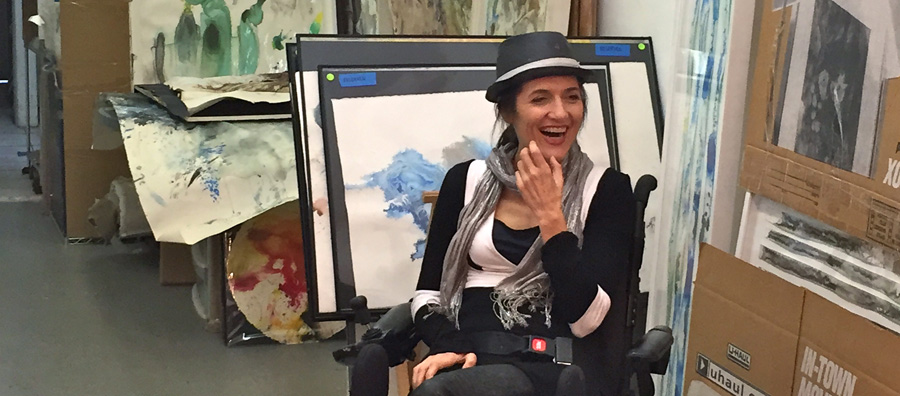
Theresa was one of the coolest-dressed people I’d seen all day. I immediately fell in love with her style and arresting smile. She was wearing a funky black hat, a pale pink punk-rocker style T-shirt, black jeans, and a set of badass red high-top kicks. Finally, there was her most unique accessory: her wheelchair.

Theresa and I spoke for close to an hour, getting to know each other. After reading more about her following our meeting, I found out that she has a degenerative disease called Friedrich’s ataxia, that causes progressive damage to the nervous system. I am incredibly inspired by how clear it is, from both meeting Theresa and reading about her, that she doesn’t allow the disease she lives with to define her or control her. She finds freedom in her work and nothing seems to hold her back from being her full, powerfully talented creative self. This fascinating article from The Villager can tell you a bit more about her story. I’m in awe of her.

IMG_7192

Theresa’s infant son, Sparrow, was with her in the gallery space. I loved the way her passion came through so clearly when speaking about art, creating, and her son. Her palpable joy and refreshing attitude toward life and art made me feel happy.

I am pleased to share a preview of her piece, “Being Two,” shown below.  I also invite you to watch this video interview, conducted with Theresa last year on ABC (Australia). It will give you a sneak peek of the amazing person and artist that I had the opportunity to meet face-to-face. Finally, I hope that if you’re planning to visit Alphabet City any time soon, you take a moment to stop by TBG at 616 East 9th St. between Avenues B & C to check out her work.

Tbyrnes3