Fashion Meets Art in Natasha Roberts Kay’s “A Room Just So” at Bergdorf Goodman

By Alexandra Goldman

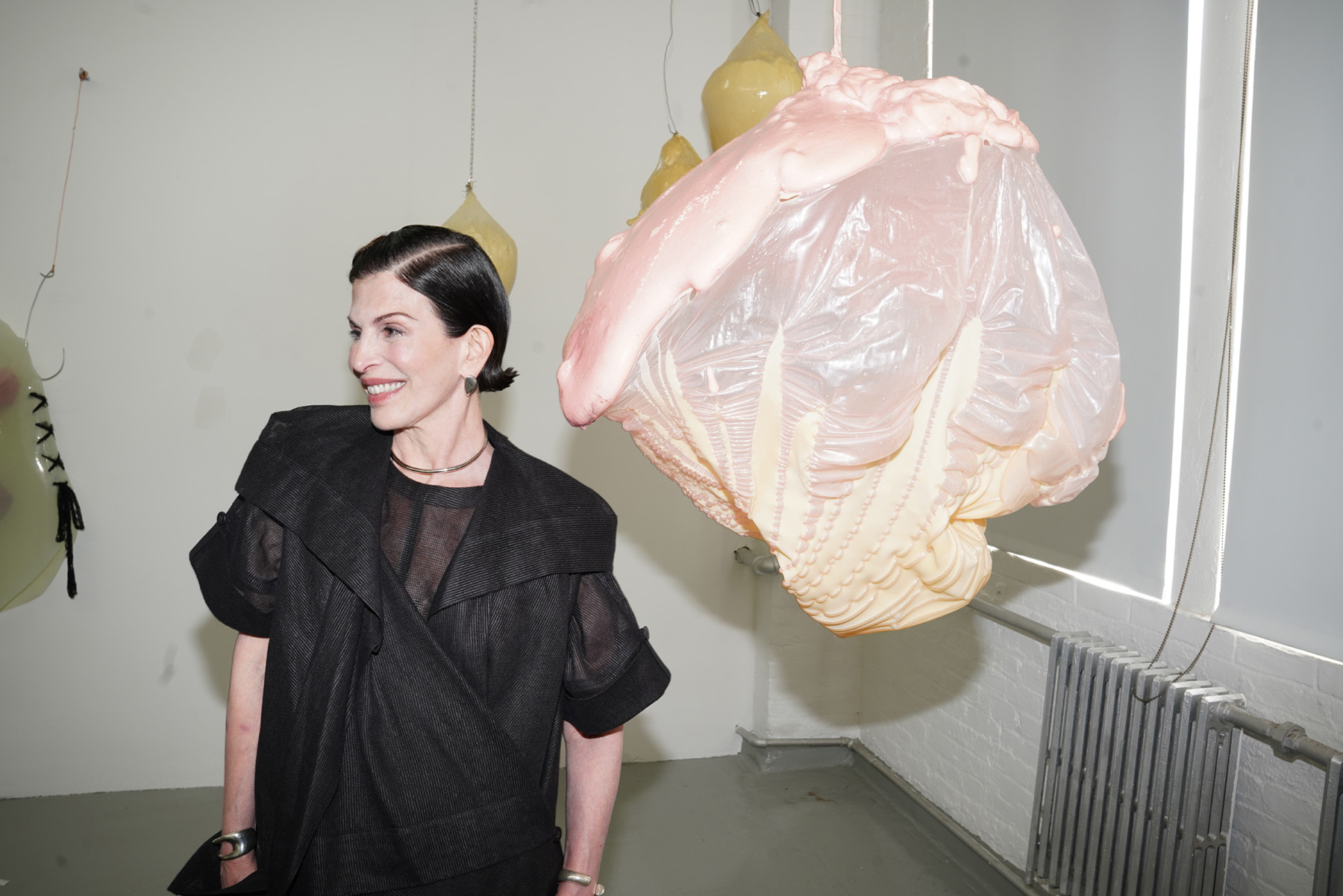
Pictured Above: Natasha Roberts Kay Photographed by Jeanne Paradiso for THE KNOW

As both New York’s Art Week and Fashion Week come to a close, a recent project came to mind that tastefully married the two worlds: A Room Just So, an exhibit of twenty international artists curated by Natasha Roberts Kay at Bergdorf Goodman.

Audrey Schilt, Behind the Scenes at Ralph Lauren (Claudia Being Fitted), Acrylic paint on canvas, 42 x 48 in. Courtesy of the curator.

Roberts Kay—a fashionista herself—wears many hats including curator, sought-after art advisor, new mom, and powerhouse publicist for the Public Art Fund. She can always be found pushing forward courageously with her vision, including regularly curating art exhibitions in New York City’s tallest skyscraper. While some in the art world shy away from embracing the connection between fine art and luxury retail, Roberts Kay orchestrates consonance between the two.
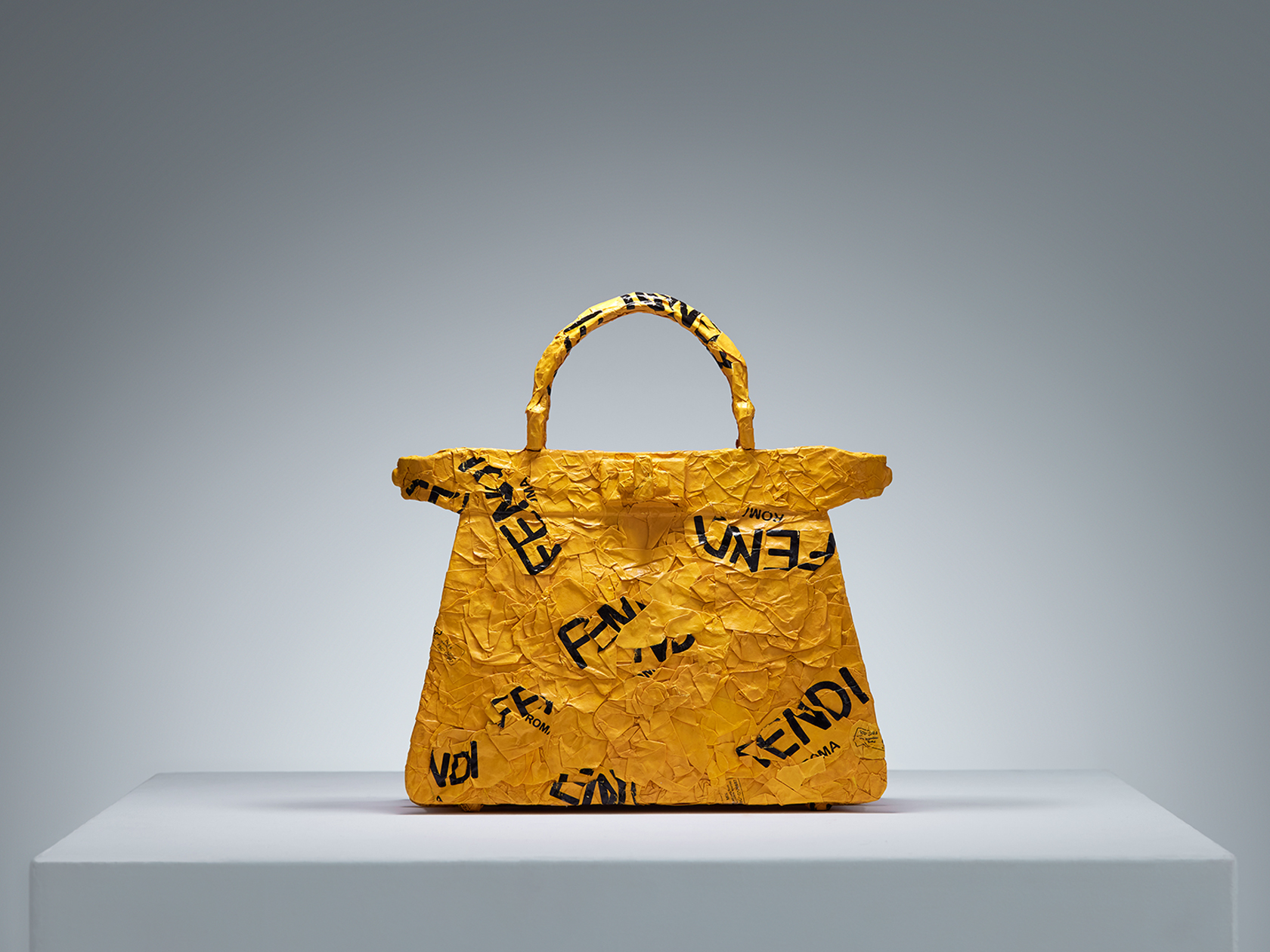
CHiNGLiSH WANG, CHiNGLiSH Brands (Fendi Peekaboo), Paper shopping bags and metal wire, 11 x 4.4 x 11.5 in. Courtesy of the curator.

This was clear to me as soon as I stepped onto the seventh floor of Bergdorf Goodman to see Roberts Kay’s curated summer art exhibition, A Room Just So. Naturally, an environment like Bergdorf’s that successfully blurs the lines between retail and art is an inviting setting for the right exhibit. For A Room Just So, appropriately located on Bergdorf’s interior design floor, Roberts Kay reimagined domestic spaces as living galleries, where paintings, sculpture, furniture, and design objects seamlessly intertwined with the art of home décor”.

Erin Kono, Persimmon I + II, Egg tempera on shaped board, 9.5 in. tondo each. Courtesy of the curator.

The exhibit, which included sixty sculptures, paintings, photography, textiles, and design objects by Alex Anderson, Vicky Barranguet, Edgard Barbosa, C.J. Chueca, Jane Dashley, Jen Dwyer, Kamiesha Garbadawala, Leia Genis, Manuela Gonzalez, Katie Hector, Erin Kono, Kouros Maghsoudi, Thérèse Mulgrew, Hannah Polskin, Gerardo Pulido, Audrey Schilt, Jeremy Silva, CHiNGLiSH WANG, Darryl Westly, and Avery Wheless, added new depth of creative storytelling to the department store’s seventh floor. The works, which ranged from abstraction, to surrealism, to figuration, to functionality, spoke to how art, design, and interior space have the capacity to shape our state of mind. Roberts Kay’s inclusion of thorough information about each artist on view with an impressive detailed audio guide elevated the show to the standards of a top commercial art gallery, while its setting at Bergdorf’s infused it with warmth by simulating living at home with the artworks. A Room Just So positioned the twenty artist’s works in a salable environment with exposure to new clientele, without diminishing their value as original works of art fit for a traditional gallery or museum.

Roberts Kay shared: “With the exhibition, my intention was to assemble a group of traditional artists who are stylish and fashion-forward. For example, Audrey Schilt started her career as Halston’s illustrator at Bergdorf’s—she even sketched Jackie Kennedy in a fitting for her iconic Pillbox hat—and now Schilt paints works inspired by her time in fashion, including her Behind the Scenes at Ralph Lauren series. Artists Leia Genis and Manuela Gonzalez works featured draped and woven textiles that were painted and dyed. CHiNGLiSH WANG sculpted iconic handbags using several major brands’ own shopping bags as material. Many of the works in A Room Just So directly demonstrated a relationship between fine art and design.” 

Gerardo Pulido, Set of #25, Gouache, watercolor, and marker on paper, 12 x 9 in. Courtesy of the curator.

Anecdotally when I entered Bergdorf’s to see A Room Just So on a quiet Friday morning this summer, I overheard a shopper speaking on the phone in the jewelry section to my left, “Hi, I’m at Bergdorf’s,” she said,  “…it’s really the last of the great department stores.” Hearing this, I thought to myself, wow, that really is true, isn’t it. Bergdorf Goodman is iconic; it has its own deeply-rooted historical weight as a bastion of elegance in New York City culture that allows it to seamlessly incorporate a foray into fine art that—with the right people like Roberts Kay on board—can be taken seriously.

Alex Anderson, Rose Vessel, Earthenware, glaze, gold luster, 10 x 12 x 12 in. Courtesy of the curator.

While A Room Just So has come to a close, currently on view in Bergdorf’s seventh floor gallery space is a new exhibit expertly organized by Tribeca-based art and design firm, Todd Merrill Studio, in partnership with de Gournay handpainted wallpaper. This new show features additional artists I love who cross over between the art and design spaces, including Andrea Marquis and Jamie Harris. Bergdorf Goodman’s seventh floor home decor space is open to view seven days a week.

Exploring the Embraceable and Unexpected with Lesley Bodzy

By Alexandra Goldman

Above: Lesley Bodzy in her NYC studio posing for Flaunt Magazine Interview, Photo by Milan Lazovski

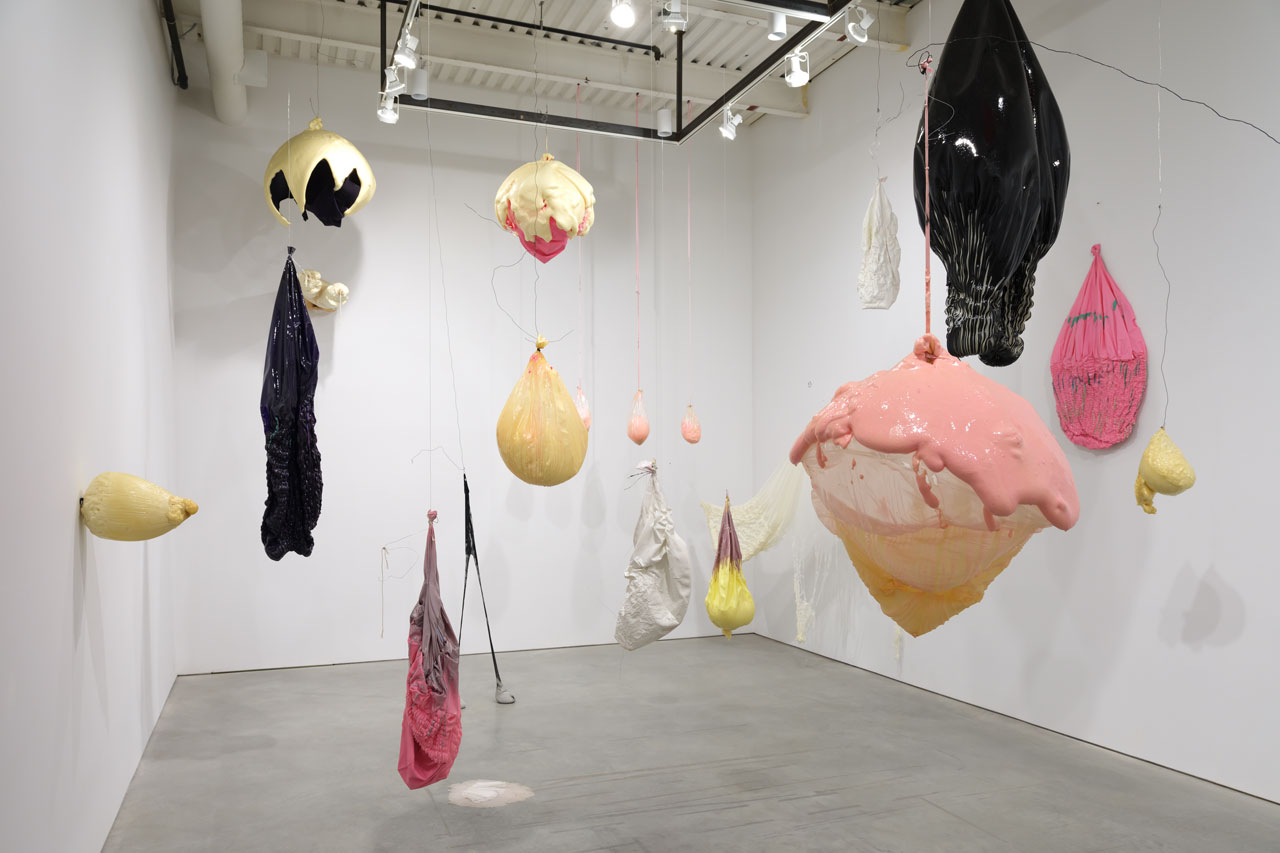
Lesley Bodzy is a mixed-media artist working in Chelsea, New York City and Houston, TX. During our recent studio visit, light pouring into her Chelsea studio bounced off and shined through her menagerie of colorful, translucent, biomorphic sculptures hanging from the ceiling, like giant jellyfish. The studio’s white walls were punctuated with abstract, bodily art objects large and small—some made of dried paint, some 3D printed, and some metallic, among other experimentations. In her sensuous environment that combined beauty with whimsy and the grotesque, it caught my attention that Bodzy had recently participated in a workshop with Judy Pfaff, a trailblazer for mixed media installation art. I noticed the visual and spatial dialogue between Bodzy’s abstract installation artwork on display in her studio, and Pfaff’s legacy. For example, we spoke of Bodzy’s decision to leave her artwork undefined as opposed to classifying it as feminist, even though it critiques patriarchal structures and the beauty industry. That was a decision Bodzy refined with Pfaff, an artist famous for denying narrative meaning to her work.

Bodzy strikes me as an impressive and curious lifelong learner, rigorously working on the refinement and development of her artistic practice. She is great at looking at herself critically, taking action, and growing. Her high level of physical production, innovation, and drive to making art in the studio rivals that of a recent MFA grad, and that’s because she is: she had a lifelong legal career as an attorney, and left it to pursue becoming a full-time visual artist in her sixties with studies at the Art Students League, Hunter College, and the Art Institute of Chicago.

In her studio—as in her exhibitions—Bodzy’s enviable, forever-youthful approach to life is on display alongside her sculpted forms. Following our energizing studio conversation and Bodzy’s immersive solo show, Levity and Depth presented by M. David & Co. at Art Cake, I sat down with the artist for an interview.

Alexandra Goldman: You’ve recently studied with the legendary installation artist and teacher, Judy Pfaff. What did you find most valuable about studying with Pfaff in terms of how she helped you develop your practice? Are there any memorable anecdotes you’re willing to share?

Lesley Bodzy: I was very lucky to work with Judy in 2024-2025 through the Yellow Chair program. She is just brilliant and has been making sculpture for a long time, so she has great insight into the work and the process of making. I was surprised by her down to earth, practical communication style. She treats everyone like a fellow artist and in that way is not intimidating and easy to learn from. She also did not try to make the students make work like hers but she found the key to each of us and worked with us at the level and aesthetic place we were at. 

Lesley Bodzy, Levity and Depth, 2025, photo by Steven Probert

AG: In your spring solo exhibition, Levity and Depth curated by Michael David of M. David & Co. and presented at ArtCake (Cordy and Ethan Ryman’s art production, exhibition and events space in Sunset Park), your whimsical, organically shaped sculptures enveloped viewers in an immersive environment. What do you feel is most important about being “among” your works rather than looking “at” them?

LB: It was surprisingly fun to be among them and this was true for most viewers I think. They became embraceable and unexpected as you walked through them—a bit like the feeling of the installation of teamLab in Tokyo. They also moved in space and are not static. 

Lesley Bodzy photographed for Flaunt Magazine, Photo by Milan Lazovski

AG: You seem to age in reverse! What is your secret, and what advice do you have for artists who struggle thinking about career success in relationship to age?

LB: Let it go. We are all aging and that is just he way it is. Best not to think too much about how much time you have left as one you can’t predict and two its not conducive to making art. 

AG: Whether inflating and popping balloons, working with resin, foam, or metal, or sculpting with paint, you tend to have a unique and experimental approach to materiality in your practice. What does a day in the life of Lesley Bodzy experimenting with materials look like?

LB: It is generally fun. I typically try to have fun with the materials and it’s like a lab. I just don’t care if I make a mess or things don’t come out as hoped because when experimenting with new materials, things seldom go as planned. 

Lesley Bodzy, studio in Houston, 2024

AG: What has making your artwork revealed to you about yourself that you didn’t know before?

LB: That things go better when they are not planned. This is just for me. You know I was an attorney and theres so much planning and detail involved in that. I am happy now to let all that go and just see what happens.

Lesley Bodzy, Levity and Depth, 2025, photo by Steven Probert

One Hundred and Fifty Layers of Laura Owens

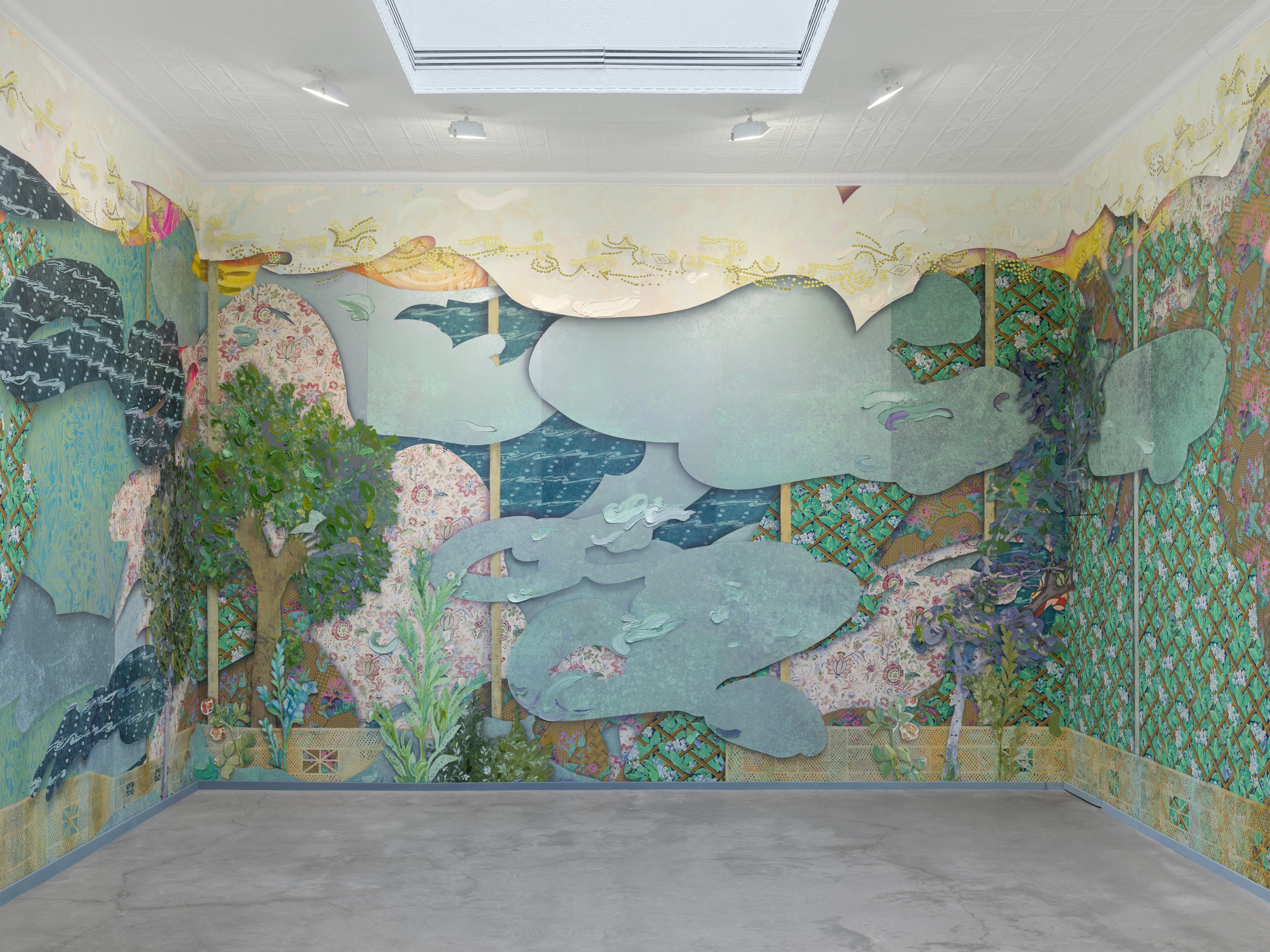
Above image: Installation view of Laura Owens, Matthew Marks Gallery, New York, February 13 – April 19, 2025. Photo by Bailey Coleman.

By Bailey Coleman

“Have you seen Laura Owens yet?”

Opening the door to the gallery I am welcomed by a nearly manic energy. Gallery goers are thrilled with themselves that they have finally made it to Chelsea to see the show everyone is talking about. Laura Owen’s eponymous exhibition at Matthew Marks has been widely lauded as a tour-de force of art making and I was just as excited as those around me to see what all the fuss was about. There is a swarm of people hovering around the gallery attendant’s desk with anticipation as the artist casts her first spell. An older woman with a fresh, blonde, blowout squeals with excitement, as a roll of tape magically moves across the desk. Suddenly, a drawer opens when her friend removes a pen from its holder. Having been witness to these moments of fantasy, we are baptized and free to pass through to the magical world of Laura Owens in her first solo show in New York City since her 2017 mid-career survey at The Whitney. 

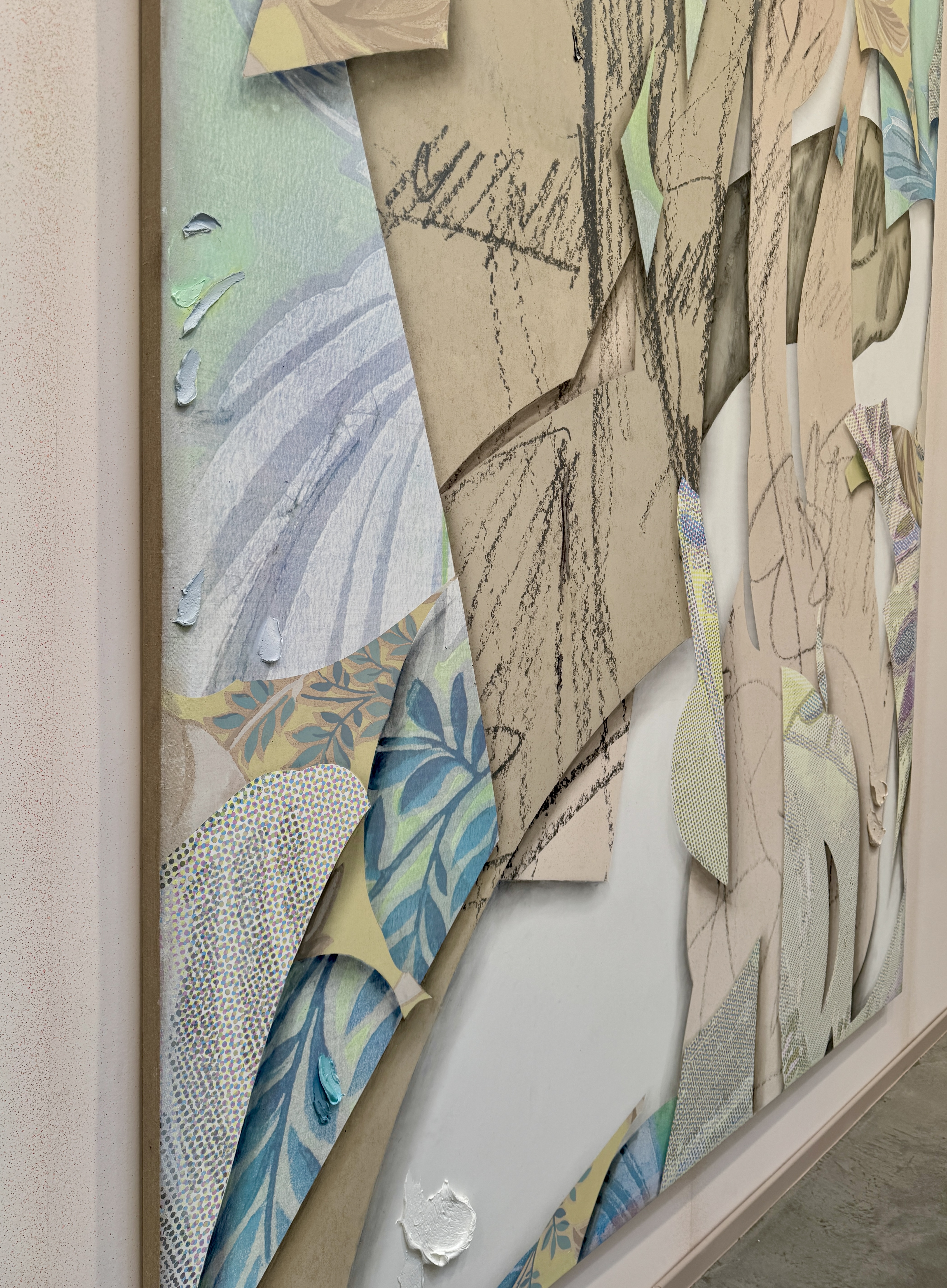
Laura Owens, Untitled (Detail), 2025, Oil, pastel, charcoal, graphite, and silkscreened Flashe on linen, 130 x 90 inches. Photo by Bailey Coleman. 

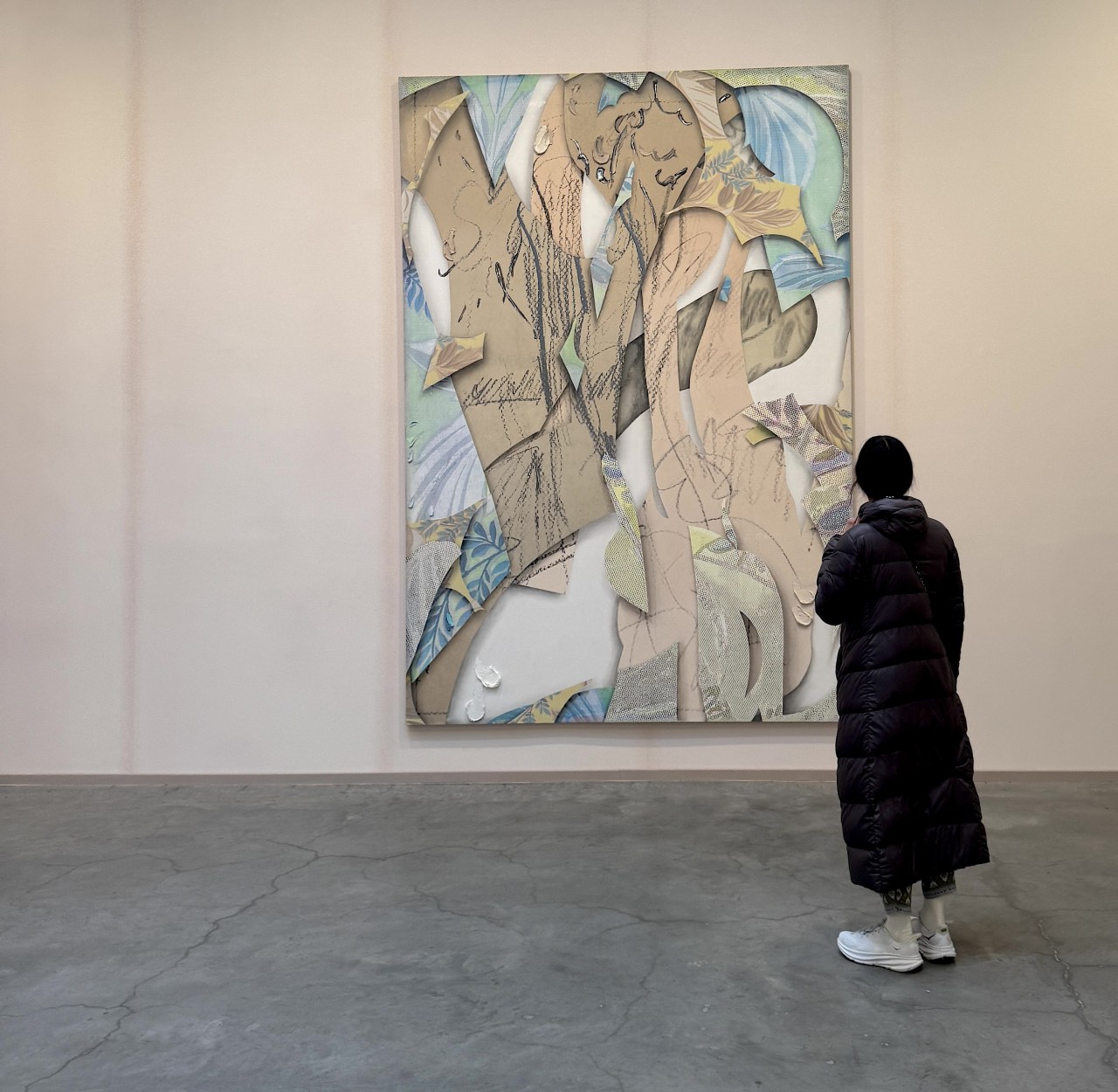
In the first gallery, ten-foot tall vertical pastel paintings hang in effigy of Laura Owens. Though not intended to burn in sacrifice, these impressive works on canvas are singular retrospectives of Laura Owens’s unique style. Collage, digital media, hand-made silk screen prints and heavy daubs of oil paint compete and complement one another in an effort to excavate the nature of contemporary abstraction. Articulated in light teal cubist forms, the painting on the gallery’s farthest wall is a combustive battleground of style and technique. The result is a soft pixelation of abstracted shapes that superimpose each other and create the illusion of material layering. Her work has been likened to artists such as Picasso and de Kooning by The New York Times and others. These artists were interested in the integrity of the picture plane and celebrating the medium specific flatness inherent to its two-dimensionality. Owens, of course, adheres to these Greenbergian ideals, however, her degloving of the picture plane goes one step further. By outlining formal elements of her composition in shadow, Owens emphasizes that these shapes, designs, and motifs are, indeed, painted, suggesting that qualities that contribute to the illusion of three-dimensional painting can extend to elements usually thought of as contributing to flatness.

Installation view of Laura Owens, Matthew Marks Gallery, New York, February 13 – April 19, 2025. © Laura Owens. Courtesy the Artist and Matthew Marks Gallery. Photo: Annik Wetter.

Once ushered through the large vault-like doors at the rear of the first gallery, I entered into what appeared to be a secret garden with hide-and-seek mechanical pop-outs that reveal small paintings. This exhibition is a surprise departure from Owens’s previous solo shows in many ways. Owens’s 2017 Whitney mid-career retrospective featured her impressive paintings on typical white walls. Now, at Matthew Marks, Laura Owens invites the viewer into an immersive environment that the artist herself has dictated. Floor to ceiling aluminum panels boast one hundred and fifty layers of her silkscreen prints, oil painting, and clay-coated paper that showcases a complex botanical motif with a lattice gate and overflowing greenery. The intricacy of the design layers and subtle shifts in depth perspective become an enveloping environment of the artist’s imagination. Suddenly, a gallery attendant opens a final hidden door to reveal a video installation in a dark, tiny, 3 x 4′ closet-like room. Craning my head upwards in the claustrophobic cinema, I watch as two black crows wax philosophical on the fall of the Roman empire and the prevalence of misogyny throughout ancient history – acting as a subtext of sorts. It felt like type of fever-dream talk show I’ve always craved, but never realized was missing from my life until I saw it.

After a moment of surreal and comedic bird-watching, I exited the principal gallery space and went next door to the annex to catch the exhibition’s final act. There, large boxes with handles, pulls, and knobs hold books and other curios. Fingering through the objects, the printed matter tells a narrative of existential exploration and metaphysical interest beyond the scientific. To my nostalgic delight, I am reminded of show-and-tell in elementary school, sharing memories tied to objects. Overall, the exhibition affirms Laura Owens as an alchemist of painting. She melds painterly skill, an eagerness to adapt unique technologies, art history, and humor, to create something entirely new and wholly her own. 

Laura Owens” is on view at Matthew Marks Gallery through April 19th, 2025.

Bailey Coleman

Bailey Coleman is a contributing writer to Artifactoid and is the founder of her own art publication: Bin Day Art. She is an art advisor and writer based in New York working with clients to curate private collections that speak to both individual desire and market interest. She received her MA in the History of Art & Curating from the University of London and her BA in Art History from Barnard College of Columbia University. 

Good Naked: When One Door Closes, A Gallery Door Opens

Above: Jaqueline Cedar in her studio. Image courtesy of Good Naked. Photo by Phoebe Berglund.

By Alexandra Goldman

After finishing her MFA at Columbia in 2009, LA-born and raised artist Jaqueline Cedar moved into a spacious apartment with her boyfriend in Ditmas Park. Like many artists at the time, she had studio space in Industry City in Sunset Park, but was priced out in 2012 as large design companies and startups moved in. “There was a mass exodus of artists from the neighborhood around that time,” she explained, “I thought about moving my studio to Long Island City or elsewhere in Queens, but none of the rent prices felt within range. Getting a studio seemed more expensive than renting an apartment.”

Painting by Jaqueline Cedar. Image courtesy of Good Naked.

Cedar’s large empathic paintings focus on psychological interactions between otherworldly cartoon characters that are both familiar in a Popeye and Olive Oil sort of way, and simultaneously absurd and unknown. Her landed-on-mars color palette, combined with some apparent Bruce Nauman influence, use of nontraditional materials (she paints on neon foam and sports mesh), and fondness for placing three or four moons in any given sky, add up to a sophisticated brand of mindfuckery that reverberates throughout the oeuvre.

Paintings by Jaqueline Cedar. Images courtesy of Good Naked.

To continue to produce her work despite the financial difficulties of finding adequate studio space, Cedar’s boyfriend suggested that she move her studio into their home. She tried it and discovered that she loved how it allowed her to work whenever she wanted, even during all hours of the night. Then, in 2015, the relationship with her boyfriend ended. Cedar needed to get a roommate to pay the rent, and transitioned into a roommate lifestyle for the next four years.

In August 2019, when her then-roommate abruptly announced she was moving out, Cedar was nervous but saw a window for a different solution to her rent deficit. Instead of finding a replacement tenant, she took a risk and made the decision to transform the majority of her apartment into a commercial art gallery with a developed, rotating program of exhibiting artists. She had past experience organizing exhibitions at Crush Curatorial, and wanted to continue to explore this path. “I started all of the planning right away in August, as I knew I would need to turn a profit almost immediately in order to make this plan work,” she said. “If it didn’t work out, I thought, I could always get another roommate later.”

Installation view, “Go For Broke” at Good Naked Gallery. Image courtesy of Good Naked. Photo by Etienne Frossard.

For Cedar, the financial pressure was a motivating factor. “Some people crumble under that type of pressure, but for me, it was energizing.” To get things going, she began conceptualizing names for the gallery and exhibition titles, and started emailing and planning studio visits with artists she envisioned working with. An initial round of positive feedback from many of her top-choice artists encouraged her to hit the ground running. She decided on her quirky gallery name, “Good Naked,” based on a Seinfeld episode that jokes about walking around your apartment naked: a classic perk of not having a roommate.

Installation view, “Go For Broke” at Good Naked Gallery. Image courtesy of Good Naked. Photo by Etienne Frossard.

What began as something she saw as an experiment for one or two months turned into a longer-term success. Cedar has already had four shows, each with an opening party, closing, and an event in between. Her events are special and build community. At the first event, she created a drawing club where guests collaborated on exquisite corpse drawings. Subsequent events featured a comedy show of female artist-comedians doing stand-up, and a supper club where an artist prepared lasagna for the group. Cedar confessed, “at first, I was inviting each guest to the gallery individually and introducing attendees to one another. Now, many people show up to my events who I don’t even know, and I’m the one being introduced!”

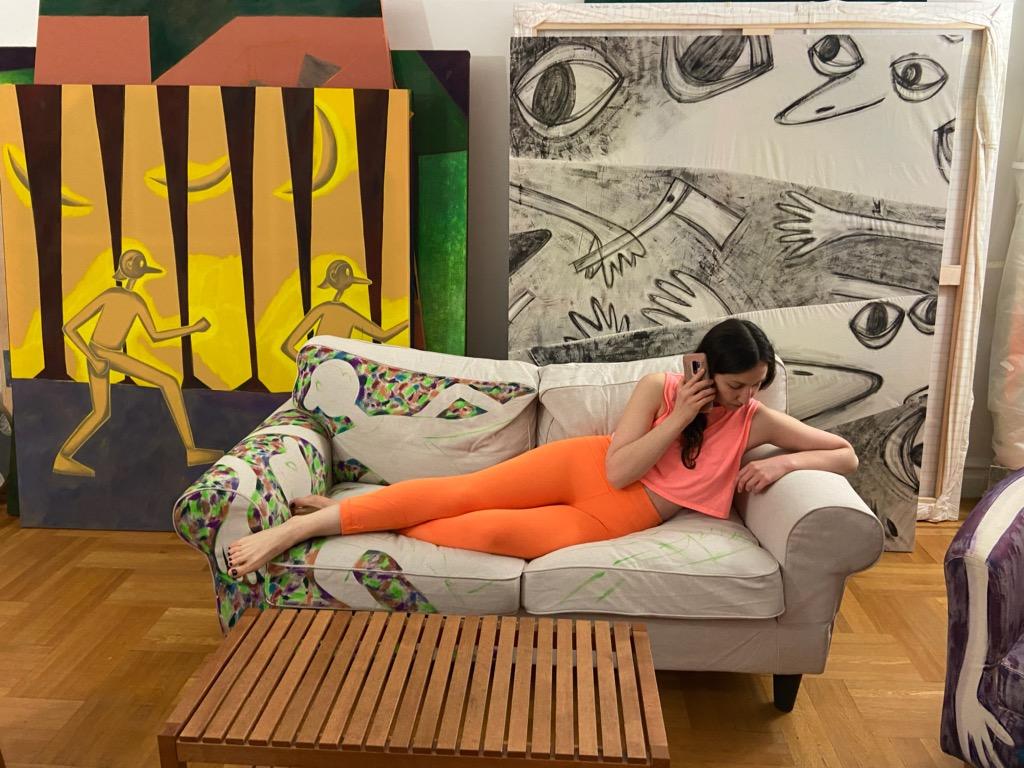
Jaqueline Cedar and Zebadiah Keneally in Cedar’s studio. Photo by Artifactoid.

Zebadiah Keneally, installation view, “Go For Broke” at Good Naked Gallery. Image courtesy of Good Naked. Photo by Etienne Frossard.

One artist who recently showed at Good Naked is poignant comedic illustrator and performance artist Zebadiah Keneally. Keneally installed a floor to ceiling immersive, painted environment featuring multiple illustrations in the apartment’s central corridor. His videos are also hilarious, many featuring his alter-ego, Hamburger Vampire.

Phoebe Berglund, Freezer Still Life (Cabbage, Shrimp, Rye Bread), 2020
Digital C-Print, 8” x 12” Edition of 20. Image courtesy of Good Naked.

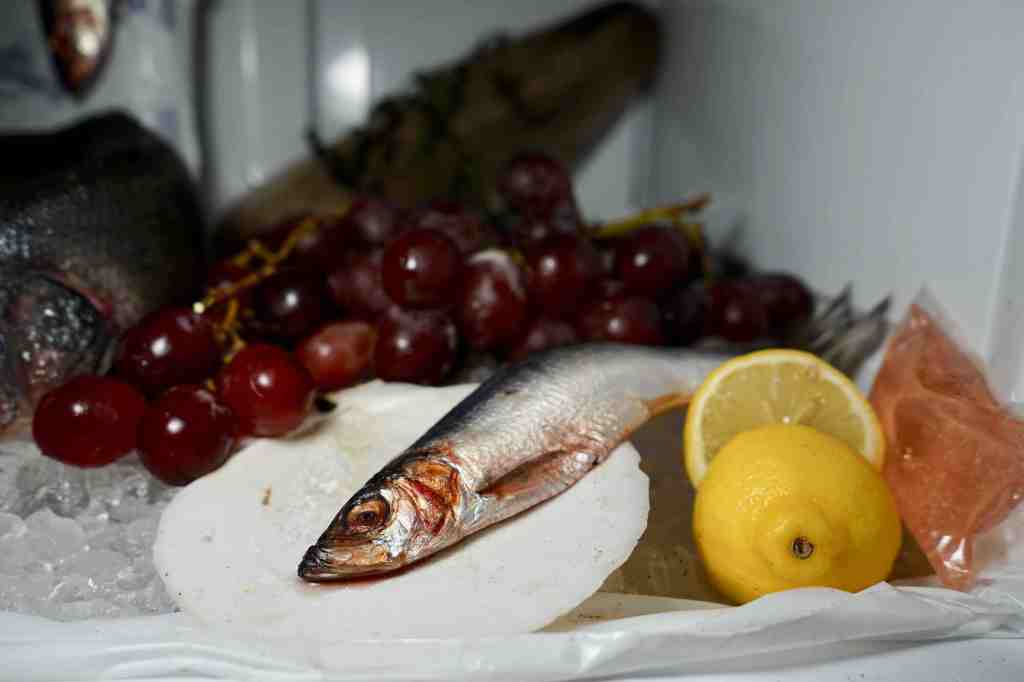
Phoebe Berglund, Freezer Still Life (Fish in Scallop Shell, Grapes, Sliced Lemon) 2020. Digital C-Print, 8” x 12” Edition of 20. Image courtesy of Good Naked.

Another recent Good Naked exhibiting artist is Phoebe Berglund. She took over the freezer in the Good Naked kitchen for two weeks to create a beautiful photography series called “Freezer Still Lives,” a memento mori to the ocean (in her words). Visitors could view the 17th century Dutch-reminiscent scene in person any time Phoebe was at the gallery, but since there were dead fish involved, Cedar explained, “it was stinking up the apartment.”

Good Naked’s upcoming exhibition “Talk Soup” opens next Friday, March 13 from 6-9pm, featuring works by Bill Adams, Jonathan DeDecker, Carl Durkow, Hyun Jung Jun, Griffin Mactavish, Rachel Jackson, and James English Leary.