Fashion Meets Art in Natasha Roberts Kay’s “A Room Just So” at Bergdorf Goodman

By Alexandra Goldman

Pictured Above: Natasha Roberts Kay Photographed by Jeanne Paradiso for THE KNOW

As both New York’s Art Week and Fashion Week come to a close, a recent project came to mind that tastefully married the two worlds: A Room Just So, an exhibit of twenty international artists curated by Natasha Roberts Kay at Bergdorf Goodman.

Audrey Schilt, Behind the Scenes at Ralph Lauren (Claudia Being Fitted), Acrylic paint on canvas, 42 x 48 in. Courtesy of the curator.

Roberts Kay—a fashionista herself—wears many hats including curator, sought-after art advisor, new mom, and powerhouse publicist for the Public Art Fund. She can always be found pushing forward courageously with her vision, including regularly curating art exhibitions in New York City’s tallest skyscraper. While some in the art world shy away from embracing the connection between fine art and luxury retail, Roberts Kay orchestrates consonance between the two.
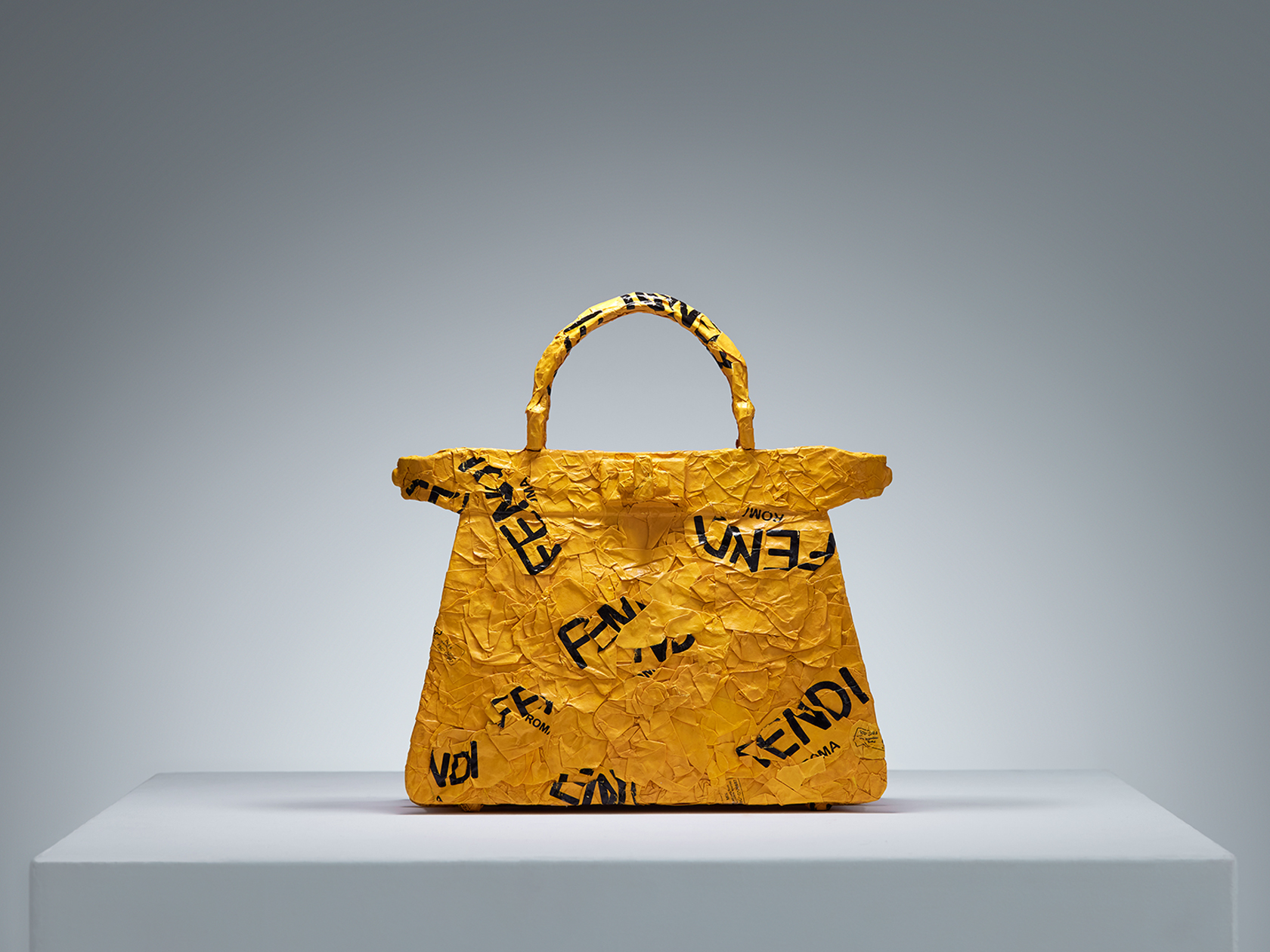
CHiNGLiSH WANG, CHiNGLiSH Brands (Fendi Peekaboo), Paper shopping bags and metal wire, 11 x 4.4 x 11.5 in. Courtesy of the curator.

This was clear to me as soon as I stepped onto the seventh floor of Bergdorf Goodman to see Roberts Kay’s curated summer art exhibition, A Room Just So. Naturally, an environment like Bergdorf’s that successfully blurs the lines between retail and art is an inviting setting for the right exhibit. For A Room Just So, appropriately located on Bergdorf’s interior design floor, Roberts Kay reimagined domestic spaces as living galleries, where paintings, sculpture, furniture, and design objects seamlessly intertwined with the art of home décor”.

Erin Kono, Persimmon I + II, Egg tempera on shaped board, 9.5 in. tondo each. Courtesy of the curator.

The exhibit, which included sixty sculptures, paintings, photography, textiles, and design objects by Alex Anderson, Vicky Barranguet, Edgard Barbosa, C.J. Chueca, Jane Dashley, Jen Dwyer, Kamiesha Garbadawala, Leia Genis, Manuela Gonzalez, Katie Hector, Erin Kono, Kouros Maghsoudi, Thérèse Mulgrew, Hannah Polskin, Gerardo Pulido, Audrey Schilt, Jeremy Silva, CHiNGLiSH WANG, Darryl Westly, and Avery Wheless, added new depth of creative storytelling to the department store’s seventh floor. The works, which ranged from abstraction, to surrealism, to figuration, to functionality, spoke to how art, design, and interior space have the capacity to shape our state of mind. Roberts Kay’s inclusion of thorough information about each artist on view with an impressive detailed audio guide elevated the show to the standards of a top commercial art gallery, while its setting at Bergdorf’s infused it with warmth by simulating living at home with the artworks. A Room Just So positioned the twenty artist’s works in a salable environment with exposure to new clientele, without diminishing their value as original works of art fit for a traditional gallery or museum.

Roberts Kay shared: “With the exhibition, my intention was to assemble a group of traditional artists who are stylish and fashion-forward. For example, Audrey Schilt started her career as Halston’s illustrator at Bergdorf’s—she even sketched Jackie Kennedy in a fitting for her iconic Pillbox hat—and now Schilt paints works inspired by her time in fashion, including her Behind the Scenes at Ralph Lauren series. Artists Leia Genis and Manuela Gonzalez works featured draped and woven textiles that were painted and dyed. CHiNGLiSH WANG sculpted iconic handbags using several major brands’ own shopping bags as material. Many of the works in A Room Just So directly demonstrated a relationship between fine art and design.” 

Gerardo Pulido, Set of #25, Gouache, watercolor, and marker on paper, 12 x 9 in. Courtesy of the curator.

Anecdotally when I entered Bergdorf’s to see A Room Just So on a quiet Friday morning this summer, I overheard a shopper speaking on the phone in the jewelry section to my left, “Hi, I’m at Bergdorf’s,” she said,  “…it’s really the last of the great department stores.” Hearing this, I thought to myself, wow, that really is true, isn’t it. Bergdorf Goodman is iconic; it has its own deeply-rooted historical weight as a bastion of elegance in New York City culture that allows it to seamlessly incorporate a foray into fine art that—with the right people like Roberts Kay on board—can be taken seriously.

Alex Anderson, Rose Vessel, Earthenware, glaze, gold luster, 10 x 12 x 12 in. Courtesy of the curator.

While A Room Just So has come to a close, currently on view in Bergdorf’s seventh floor gallery space is a new exhibit expertly organized by Tribeca-based art and design firm, Todd Merrill Studio, in partnership with de Gournay handpainted wallpaper. This new show features additional artists I love who cross over between the art and design spaces, including Andrea Marquis and Jamie Harris. Bergdorf Goodman’s seventh floor home decor space is open to view seven days a week.

A Conversation on Supporting Artists and Taking Risks with NYC Culture Club’s Parker Calvert

By Alexandra Goldman

Pictured above: NYCCC 2nd Annual Benefit. Photo by Casey Kelbaugh/CKA and Ilya Savenok/CKA.

This article was originally published in Cultbytes.

Brothers Parker and Clayton Calvert, founders of NYC’s Culture Club (a 501c3 art nonprofit with a brick-and-mortar gallery component) do not only create and curate art; they curate people—warm, kind, and intelligent people spanning all areas of the art world from artists, to curators, to dealers, to critics, to auctioneers. For their spring benefit, a community of three hundred guests and committee members rallied around the Calverts and the NYC Culture Club to support their cause at 7 World Trade Center. I felt lucky to be in attendance this year; vibes were high.

The evening’s honorees were the author, curator, art critic, activist, and NYU professor Dr. Nicole Fleetwood, and the artist and educator teaching between New York and Florence, Italy, Salvatore Catalano. The benefit featured a silent auction and a live auction led by auctioneer Ruth Maudlin with work by fifteen artists Enzo Barracco, Gabe Aiello, John Black, Michael De Feo, Michael Sadowsky, Minku Kim, Michela Roman, Hope Buzzelli, Djordje Skendzic, David Hollier, Cavier Coleman, Faustin Adeniran, Michael Sadowsky, Ricardo Arango, and Natasha Blodgett. The auction lots looked beautiful against the backdrop of the New York City skyline from the fortieth floor.

Guests danced to a DJ set by Timo Weiland, and plentiful servings of champagne and caviar from brilliantly appointed sponsors Billecart-Salmon Champagne and Kaviari Caviar were enjoyed. In light of the success of the event, I sat down with Parker Calvert for an interview to discuss NYC Culture Club’s upcoming plans.

Parker Calvert New York Culture Club NYCCC
NYCCC 2nd Annual Benefit. (L to R Dr. Nicole Fleetwood, Parker Calvert). Photo by Casey Kelbaugh/CKA and Ilya Savenok/CKA.

Alexandra Goldman: In your opinion, what is particularly important about nonprofits like New York City Culture Club right now, especially considering the current political climate and budget cuts affecting the arts?

Parker Calvert: Nonprofits like ours are critical to providing opportunities to artists and curators that otherwise don’t exist. Too often in the art world, the commercial viability of shows keeps certain exhibitions from being put on. This lack of risk-taking means lots of rotating exhibitions with established and already renowned artists. We believe that creating space where artists come together, regardless of if a show can sell out or not, creates organic opportunities for connection and discovery. This is even more important now than ever as the arts have been attacked at the highest level.

How did the idea to found the NYCCC nonprofit come about?

Clayton and I founded NYCCC during the pandemic, when we saw artists leaving NYC and empty retail locations. We felt like this project would be a great chance to contribute back to the NYC cultural scene by creating a community hub for talented artists, without the commercial pressures of having a sellout show.

Could you share some of your favorite recent artist-related highlights or success stories from your work with the organization?

Many of the artists we have exhibited have gone on to join great residency programs, exhibit in major galleries and have their work collected into major institutions. Rather than highlight specific artists, I think it would be great to note that many of the artists we have exhibited have gone on to residencies at Silver Art Projects, gotten their MFA’s at New York Academy of Art, taught at Pratt and Columbia, and exhibited with Jeffrey Deitch and Gagosian.

What are your plans for NYCCC in the coming year and in the longer term?

We plan to continue exhibition programming in more spaces, as well as to offer more residency opportunities. We love to connect the dots and bring together our community of artists—which at this point comprise more than 500 artists exhibited. We would love to continue to foster career development and help guide emerging artists in their careers.

New York Culture Club NYCCC
NYCCC 2nd Annual Benefit. Photo by Casey Kelbaugh/CKA and Ilya Savenok/CKA.

In what specific ways are you looking forward to using the funds raised at the benefit to support artists in your community?

We plan to spend the funds raised on our operational budget. We have a very lean structure, as Clayton and I have volunteered for the last four years. Our budget is devoted to exhibition expenses and staffing exhibitions.

How can people view work by NYCCC artists this summer, and what are some ways they can continue to support the organization throughout the year?

We are focusing on our artists basketball tournament, Ball for Art, which features artists, gallerists, and art dealers playing basketball to support five arts nonprofits. This game is free and open to the public. All funds raised go directly to supporting: NYC Culture Club, ArtNoir, Silver Art Projects, Artolution, and ArtsConnection. Our exhibitions are on a summer break as we find a new gallery space. We will have more programming in place as soon as our next space is squared away.

What keeps you inspired and motivated in your work with NYCCC?

Seeing the direct impact of our programming both on the artists and the general public is very rewarding. We have seen many artists who needed a boost at just the right time to persevere through this difficult climate. It is very meaningful to be a part of a bigger NYC art community—especially in a way that values art for the creativity and expression, and not just the market value. We are actively seeking more ways to engage our community of artists, to create opportunities, and to spread the power of art.

More Photos from the Benefit

Chellis Baird Josh Campbell New York Culture Club NYCCC
NYCCC 2nd Annual Benefit. (L to R Chellis Baird, Josh Campbell). Photo by Casey Kelbaugh/CKA and Ilya Savenok/CKA.
Jason Wallace, Jamel Robinson, New York Culture Club NYCCC
NYCCC 2nd Annual Benefit. (L to R Jason Wallace, Jamel Robinson). Photo by Casey Kelbaugh/CKA and Ilya Savenok/CKA.
NYCCC 2nd Annual Benefit. (L to R Vajra Kingsley, Erica Boginsky, Esther Park). Photo by Casey Kelbaugh/CKA and Ilya Savenok/CKA.
Tariku Shiferaw
NYCCC 2nd Annual Benefit. (L to R Anwarii Musa, Aiza Ahmed, Tariku Shiferaw). Photo by Casey Kelbaugh/CKA and Ilya Savenok/CKA.

Why Hasn’t James Lee Byars Been Exhibited at Dia?

By Alexandra Goldman

This article was originally published in Cultbytes.

Above: Installation view. “James Lee Byars: Perfect is the Question” curated by Vicente Todolí at Reina Sofia Museum Palacio de Velázquez, Madrid, Spain, May 10 – Sep. 1, 2024. Photo: Alexandra Goldman.

James Lee Byars occupies an interesting place at the intersection of minimalism and spirituality. Recalling the spiritual abstract painters Agnes Pelton and Hilma Af Klint who preceded him, there is this idea of the spiritual abstraction of the earlier half of the 20th century seeping into the conceptual minimalist sculpture of the latter half, which coalesces harmoniously in Byars’s work. Within it, he’s secured his unique position in art history, in a way that feels sincere.

Visiting “Perfect is the Question,” the American conceptual installation and performance artist Byars solo exhibition at the Reina Sofia Palacio de Velázquez in Madrid, I became interested in Byars’s unique ideas. I was excited that this was the “old stuff”—the good stuff. Even though his work is large and takes up space, it is quiet and pensive, rather than an overt visual spectacle. Presenting work from the 1950s-1990s, “Perfect Is the Question” at The Reina Sofia was curated by Vicente Todolí, and was the second iteration of a traveling exhibition that began at Pirelli HangarBicocca in Milan.

James Lee Byars. “A Dozen Facts,” 1967, in “James Lee Byars: Perfect is the Question” curated by Vicente Todolí at Reina Sofia Museum Palacio de Velázquez, Madrid, Spain, May 10 – Sep. 1, 2024. Photo: Alexandra Goldman.

The exhibition emphasizes Byars endorsement of the color gold, asserting it is not decorative, but rather, is spiritual, closer to god, like halos in fifteenth-century religious oil paintings. He also worked frequently with the colors white and red, also spiritual and powerful in their own ways – elemental colors. He works with the idea of the perfection of the circle, Da Vinci’s Vitruvian Man and “perfect proportions”, the “perfection” of death, and the physiological effects of minimalist sculpture on the viewer (think Tony Smith’s Die, 1962 as a six-foot gold pillar) He works with the ideas of myths, beliefs, transcendence, religious relics, architecture, and coveted objects. For example, he created a fantastical reliquary-like sculpture based on the once-held belief that narwhal tusks were unicorn horns. He combines the aesthetics of 1960s minimalism with Eastern philosophy, medieval Christianity, and the Renaissance interest in mathematical perfection in aesthetics.

Installation view. “James Lee Byars: Perfect is the Question” curated by Vicente Todolí at Reina Sofia Museum Palacio de Velázquez, Madrid, Spain, May 10 – Sep. 1, 2024. Photo: Alexandra Goldman.

Upon my return to New York, I looked at the “50 Years of Dia” webpage. I could not believe I did not see Byars’s name listed. He seems to fit in perfectly with this group of artists, and his spiritual twist to minimalism deserves recognition at this major establishment for installation art. It is not that Dia Art Foundation is the be-all and end-all of institutions, but for conceptual installation and large-scale minimalist sculpture (especially from the second half of the 20th century), it is hard to beat. Nor did I hear Byars’s name in my 2019 graduate-level Art History course on minimalism at Hunter College.

Michael Werner Gallery’s co-owner Gordon VeneKlasen, who represents the Byars estate, has been working on getting Byars into Dia for years. He thinks that Byars is excluded from the history of U.S. minimalism because of his interest in the immaterial: “Byars had a very different way of dealing with things than the minimalists because of his interest in the dematerial. He spent a ton of time in Japan and wanted to make immaterial work. He wanted to make the work disappear. The Minimalists would make an object and then would write a theory about it. He, conversely, would take an idea and make it concrete. No wonder he connected so closely with Beuys and Broodthaers. He was also really in with Rudi Fuchs and Harald Szeemann—the European curators.”

Byars had a retrospective at MoMA PS1 in 2014, 17 years after his death. Furthermore, he has had a significant exhibition history in the U.S. I might be the last one to the James Lee Byars party, or as the death-obsessed artist might have said—the last guest at his funeral. VeneKlasen emphasized: “He was a hero to so many artists. Dia artist Anne Truitt started every lecture of hers by saying: ‘We need to talk about James Lee Byars.’”

Installation view. “James Lee Byars: Perfect is the Question” curated by Vicente Todolí at Reina Sofia Museum Palacio de Velázquez, Madrid, Spain, May 10 – Sep. 1, 2024. Photo: Alexandra Goldman.

A versatile artist, Byars worked with a lot of natural and found materials; not only the narwhal horn, but dried roses, silk, wood, marble, paper, and sandstone. He was doing performances that involved choreography, geometry, and spirituality. He was experimenting with photography in the ‘60s and ‘70s, photo-documenting his performances as well as incorporating books and written ephemera into his practice. In 1969, his performance “The World Question Center” was broadcast on Belgian national television and comprised of intellectuals asking him significant questions—among them were Marcel Broodthaers and John Cage, writer Simon Vinkenoog, doctor Robert Jungk, and Knesset member Uri Avnery. The piece inspired The Reality Club, a New York-based group of intellectuals who met between 1981-1996.  And, the title of the Madrid retrospective. Byars’s inquisitive practice touched the lives of many artists and intellectuals across the world.

In one of Byars most famous performances, “The Death of James Lee Byars,” the artist symbolically staged his leaving the physical world. It ook place shortly after he had been diagnosed with terminal cancer in 1994. The performance was set in a gilded gold room with crystals configured in a five-point shape representing his body, himself physically absent. It incorporated his ideas of spirituality and Da Vinci’s “five points” theory to represent any human body, as well as Eastern ideas learned from his years spent in Kyoto, Japan in the late 1950s. A couple of years later, in 1997, he died in Cairo where he was making art with artisans.

Installation view. “James Lee Byars: Perfect is the Question” curated by Vicente Todolí at Reina Sofia Museum Palacio de Velázquez, Madrid, Spain, May 10 – Sep. 1, 2024. Photo: Alexandra Goldman.

Byars has been lauded and recognized worldwide for half a century. He was included in Documenta 5, 6, 7, 8, and 9 in Kassel, Germany, and the Venice Biennials of 1980, 1986, and 1999. Apart from “James Lee Byars: Back in Detroit” presenting the artist’s performances at Wayne State University, Byars work is mostly being reexamined in Europe. In Europe, the traveling show “Perfect is the Question” and a dual retrospective held during this year’s Venice Biennial at the Palazzo Loredan, the seat of the Istituto Veneto di Scienze, Lettere ed Arti, alongside works by Seung-taek Lee are incredibly dense in further contextualizing the multi-faceted artist. The exhibition in Venice was a follow-up exhibition to one organized in London by Michael Werner Gallery and Lee’s Seoul gallery, Gallery Hyundai.

Byars left the U.S. in the late 1960s upon an invitation from Anny De Decker to join her gallery Wide White Space Gallery in Antwerp, and he never moved back. Veneklasen, who is based in New York, explains: “He just didn’t really fit in here. His first [seminal] performance was in 1969 in Belgium. He made his career in Europe. He disconnected. He was the American artist who was never an American.” He is quick to add: “But he was and is truly an American artist; he was born in Detroit.”

Byars is more present in European institutions than in the U.S., even though he is American. Is it because he spent a long time living in Japan, or because he died in Cairo? Whatever the reason it is time to bring him back to New York.

Constant Thinking, Museo Reina Sofia

On a recent trip to Madrid I visited the Reina Sofia Museum. I’d been waiting to see this museum in person for years since in 2011, I’d created subtitles for a video interview that was included in a Roberto Jacoby exhibition there titled El Deseo Nace en El Derrumbe.

ReinaSofia4

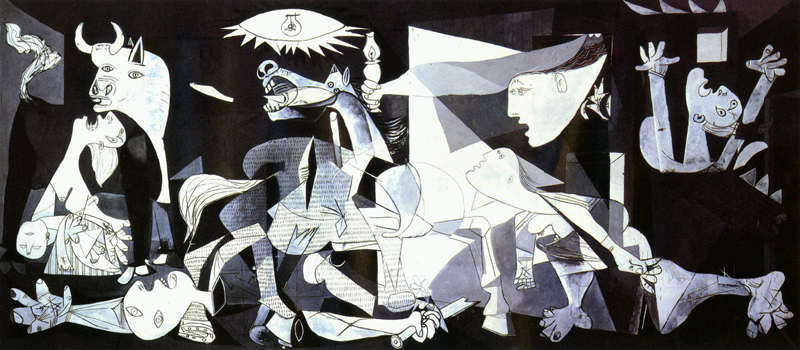
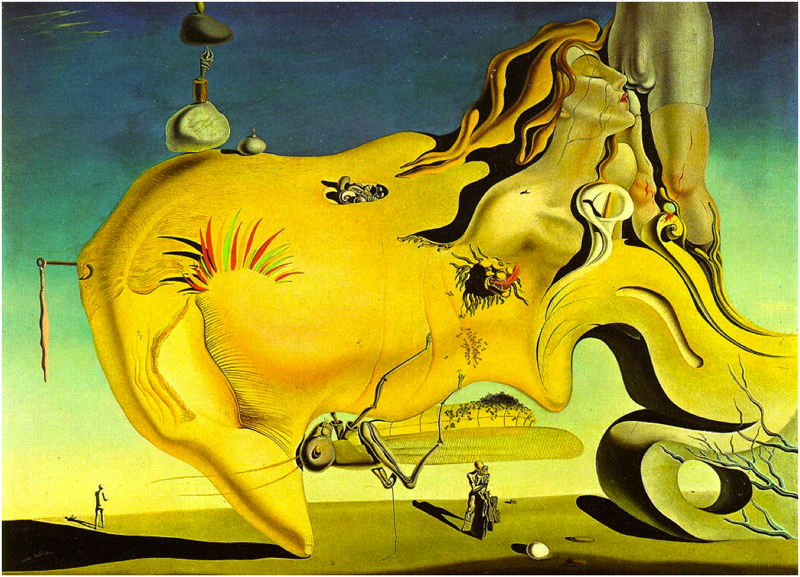
When I finally got to the Reina Sofia this October, it was everything I’d hoped it would be and more. Walking around inside the physical building was a beautiful experience. Its features included giant windows, stone hallways, modern exoskeletal glass elevators exposing sweeping views of the city, and a romantically-lit garden courtyard as the edifice’s centerpiece. There were floors of modern and contemporary art including some breathtaking very famous works, like Picasso’s Guernica (which I stood in front of for about 20 minutes; actual size=11′ 5″x 25’6″) and Dali’s The Great Masturbator

Guernica

Dali1

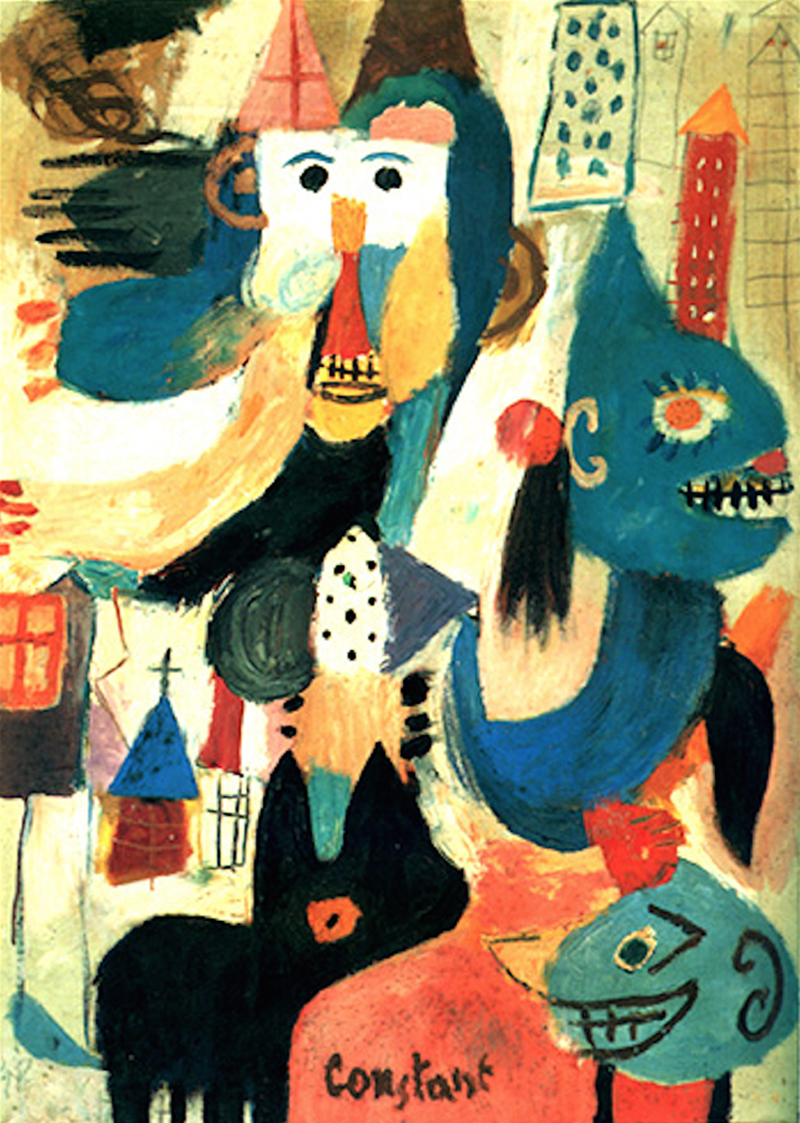
Aside from the museum’s impressive permanent collection, one of the temporary exhibits really stood out. It was the Dutch artist Constant Nieuwenhuys (1920-2005). Constant’s earlier works had a dark yet whimsical painting style which I absolutely love. I wondered why I hadn’t heard of him before, because to me he seemed like he should have been as famous as Picasso or Dali.

Constant2

Constant3

Other works of Constant’s were architectural, and some worked with the concept of the labyrinth. One project that Constant was very well known for was called “New Babylon.” The idea of New Babylon was an anti-capitalist city that would promote creativity as one of its main focuses.

Constant1

I am interested in researching more about Constant and New Babylon in the future. There is so much to find out about his diverse career, and I’m glad to have had my eyes opened to his work by the Reina Sofia.